
Last updated November 23, 2026
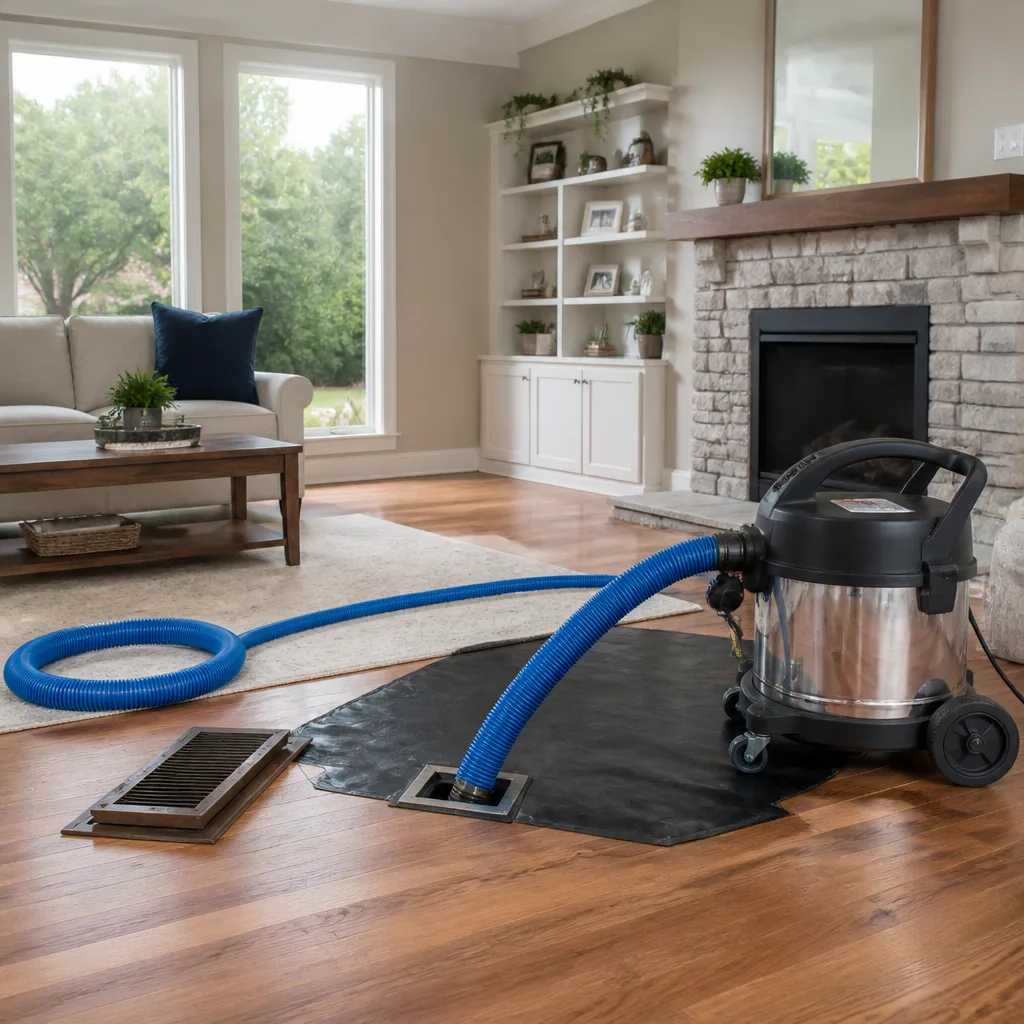 Whole-home duct cleaning
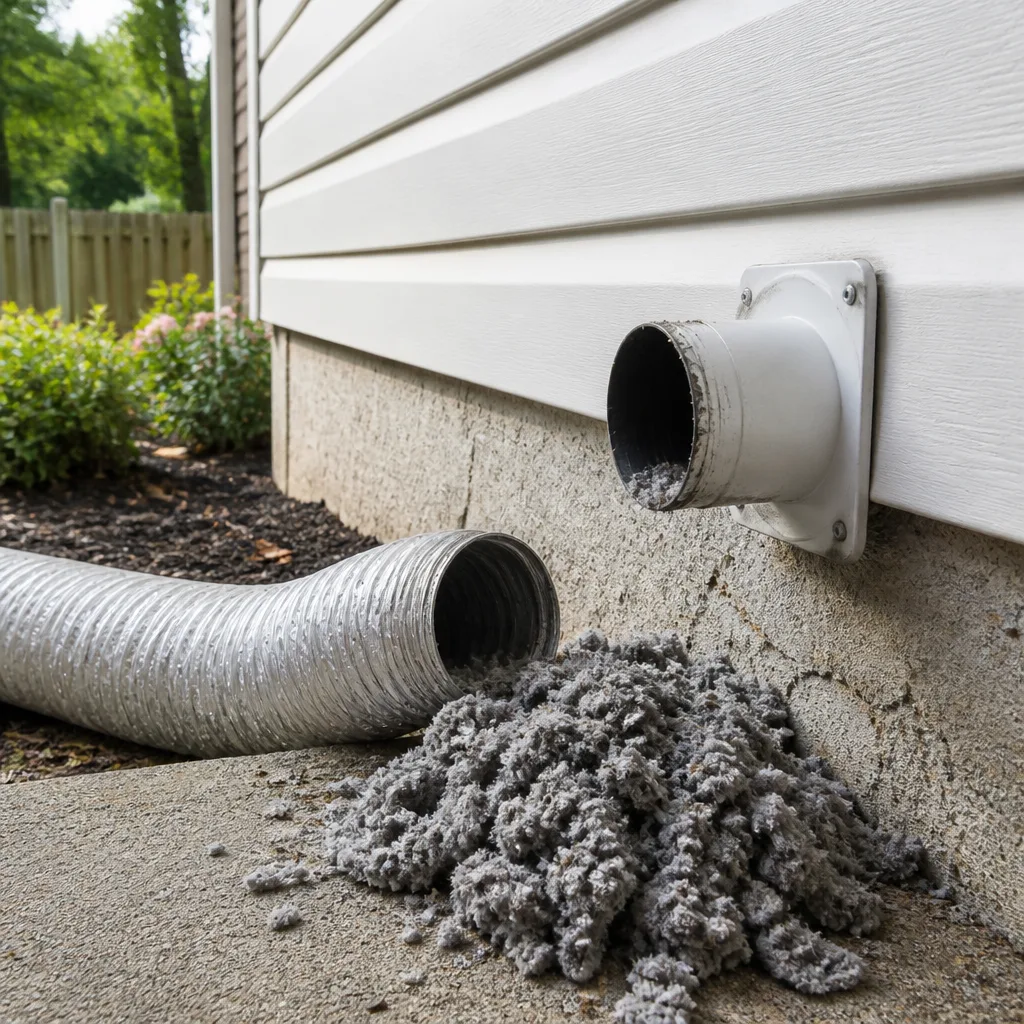 Dryer vent cleaning
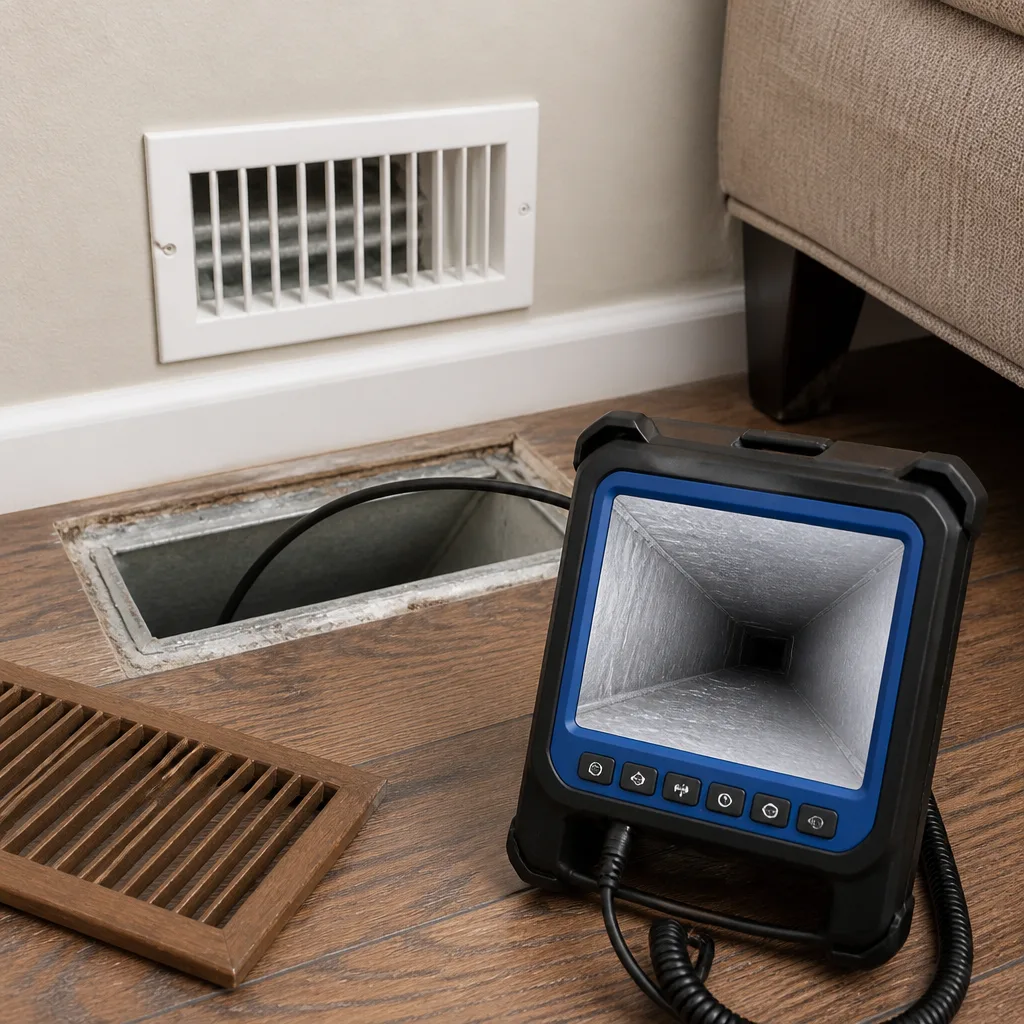 Camera inspection
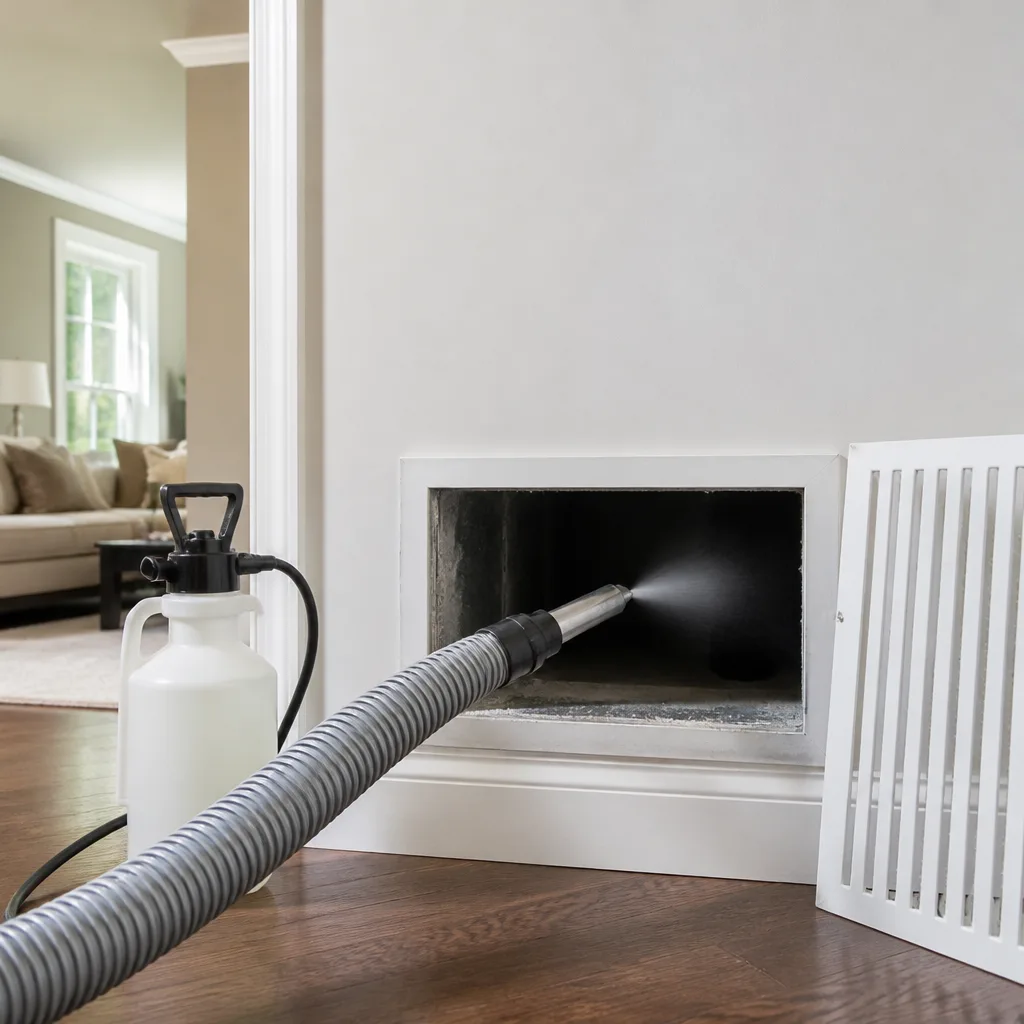 Sanitizing & deodorizing
Whole-system duct and dryer vent check with before-and-after photos - you see exactly what came out of your vents
That "$99 whole-house special" is a bait ad - the real number appears once they are in your hallway, or the "clean" is a shop-vac at the register. We photograph the inside of your ducts before and after instead.
Choosing the Right Air Duct Cleaning Brand: A Buyer’s Guide for Placentia
Any contractor can claim they use “professional-grade equipment.” The ones doing it right can tell you the CFM rating of their vacuum system, the brand and model of their inspection camera, and the EPA registration number of their sanitizer. Most can’t. That gap is the whole problem with how duct cleaning gets sold. You’re handed a low number over the phone, a crew arrives with a portable unit and a hose, and nothing about the visit is verifiable. This guide fixes that. It explains the equipment categories that actually determine whether a job meets industry standards or just looks like it does, how to verify what a Placentia contractor claims before anyone reaches your door, and which questions separate a real indoor air quality specialist from a price shopper’s van.
Quick Answer
The right air duct cleaning brand is the one whose equipment you can verify before work starts. A source removal vacuum system (truck-mounted or a high-output portable like Rotobrush or Nikro), a documented inspection camera, negative-air containment such as Abatement Technologies, and EPA-registered sanitizers tell you far more than any coupon. Ask for the brand names and model numbers, request before-and-after video, and get one flat price per system in writing.
Styles & brands we work with
- Whole-home duct cleaning
- Dryer vent cleaning
- Camera inspection
- Sanitizing & deodorizing
Table of Contents
- Why Equipment Brands Matter More Than the Sales Pitch
- Vacuum Systems: Truck-Mount vs. Portable and the Ratings That Count
- Agitation Tools: Rotary Brush, Air Whip, and When Each Is Right
- The Brand Names Placentia Crews Should Be Able to Name
- Inspection Cameras and Pre- and Post-Cleaning Documentation
- Sanitizers: EPA Registration vs. Essential Oil Sprays
- Duct Sealing: Aeroseal vs. Mastic vs. Tape
- How to Verify a Placentia Contractor Before They Arrive
Why Equipment Brands Matter More Than the Sales Pitch
Duct cleaning has a measurement problem. When you get a roof replaced, you can look at the shingles. When you get a water heater installed, you can read the model plate. Duct cleaning happens inside the walls and overhead, out of sight, and the result of a poor job looks identical to the result of a good one from your couch. That’s exactly why equipment matters: it’s the only verifiable evidence you have before the work happens.
The industry standard that governs this work is NADCA, the National Air Duct Cleaners Association. NADCA’s core principle is simple. You must physically dislodge contaminants from every surface inside the system and then remove them, not just blow them loose into the air. A vacuum with the wrong ratings won’t move the debris. An agitation tool without the right vacuum won’t contain it. Both failures leave the same thing over your living room: a cloud of fine dust that settles back into the system and the air you breathe.
In our experience, most homeowners in Placentia aren’t asking which equipment gets used because they love specifications. They’re asking because they’ve been burned before. A crew showed up, ran a hose for forty minutes, and left. No camera before, no camera after, no documentation. Here’s the standard we hold ourselves to, and the one you should hold any contractor to:
- Source-removal capability. A collection system strong enough to pull dislodged debris out and away.
- Negative-air containment. Filtration equipment that captures what comes loose during the process instead of recirculating it through your home.
- Named brands. Rotobrush, Nikro, Abatement Technologies. These are professional systems, not relabeled shop vacs.
- Documentation. Pre- and post-cleaning video you can actually see.
A brand name is only useful if it’s true. The point of this guide isn’t to sell you on brand loyalty. It’s to give you enough vocabulary to test any claim you hear. When you understand what a Rotobrush actually is and what an Abatement Technologies negative-air unit does, you can spot the gap between a trained crew and a van with a hose.
Vacuum Systems: Truck-Mount vs. Portable and the Ratings That Count
Vacuum collection is the single most important piece of equipment on a duct cleaning job. It’s also the one contractors obfuscate most. The two numbers that matter are CFM (cubic feet per minute, how much air the unit moves) and water column lift (how much suction pressure it can hold). Consumer shop vacs run in the low single digits on both. Professional systems are built to a completely different spec. A truck-mounted unit typically produces the highest CFM and water column because the power doesn’t have to be shoehorned into a machine you carry up a ladder. A professional portable like a Rotobrush or Nikro system delivers strong suction for residential systems where a truck can’t reach the air handler, which is common in the interior air handler closets and garage-mounted furnace setups you find in Placentia and across North Orange County.
Here’s the comparison that actually matters:
- Truck-mounted systems. High CFM and high water column. Best for larger homes and commercial systems. Not always practical, since the truck has to park close enough to reach the air handler with a hose run.
- Professional portables (Rotobrush, Nikro). Designed specifically for residential and light commercial duct cleaning. Strong enough for a proper source-removal job, flexible enough to work from an access point inside the home. The standard choice for individual homes.
- Consumer-grade units. Sold at any hardware store. Lacking in both CFM and water column. Will not move the debris buildup that settles in a system, and shouldn’t be counted as a duct cleaning system at all.
When someone quotes you a job, ask what vacuum system they’ll use and what its CFM and water column ratings are. A contractor who cleans ducts professionally should answer without hesitation. A price shopper will change the subject. In our market, we use Rotobrush and Nikro professional equipment on duct cleaning jobs because it’s built for exactly this work, and it’s the equipment HVAC professionals themselves rely on.
Agitation Tools: Rotary Brush, Air Whip, and When Each Is Right
Suction alone doesn’t clean ducts. Contaminants cling to the walls of the ductwork, and to remove them you need agitation, a mechanical tool that breaks the bond between the debris and the duct interior. There are three main types, and knowing the difference tells you whether the contractor is matching the tool to the build of your system or just running whatever fits.
Rotary brush. A spinning brush on a flexible rod that scrubs the length of the duct. Excellent for rigid sheet-metal ductwork found in many Placentia homes, where the bristles can physically loosen packed dust from the walls. Poor choice for flex duct, where aggressive brushing can tear the inner liner.
Air whip. Compressed air driven through a rotating whip head that blasts debris from the walls without contact. Built for flexible duct because it doesn’t physically scrub. If your Placentia home has flex duct running through the attic and between the floors, the whip is the right tool.
Skipper ball. A forward-propelled air tool that works its way down a duct run and agitates as it goes. Useful in longer runs where a brush can’t navigate quickly, and often paired with an air whip on a mixed system.
The professional judgment is in the selection. A system with sheet-metal trunk line and flex branches needs both a brush and a whip. A contractor using one tool for every job is either cleaning less than the full system or risking damage to part of it. If you’re curious what the process looks like end to end, our page on air duct cleaning walks through it step by step.
The Brand Names Placentia Crews Should Be Able to Name
When you’re comparing quotes, the brand names a contractor can recite without checking a phone are a rough proxy for how much they know about their own trade. Here’s the short list worth committing to memory. If a crew can’t discuss at least a couple of these, it tells you something.
- Rotobrush. A professional-grade portable duct cleaning system built specifically for residential and light commercial air duct work. The air whip and rotary brush are part of the same system, which matters because they’re designed to work together with the vacuum.
- Nikro. Another professional line of duct cleaning equipment and filters, known for building HEPA filtration and negative-air units used in restoration and duct cleaning. If you’re told they run Nikro, ask whether the system includes a HEPA filter stage.
- Abatement Technologies. The standard for negative-air and filtration equipment on jobs where containment matters. When a system is heavy with buildup, the Abatement Technologies unit is what captures dislodged contaminants at the source, so they never make it into the room air.
- RamAir. A truck-mount and portable duct cleaning line used by contractors who want high-CFM collection for larger systems. A reasonable brand to hear named on a bigger property.
Two of the four on that list, Rotobrush and Abatement Technologies, are what we run on duct cleaning jobs in Placentia. They’re commercial-grade, and the nameplate differences are real: higher suction, tighter containment, and a cleaning process that can be documented from start to finish instead of just claimed.
Inspection Cameras and Pre- and Post-Cleaning Documentation
An inspection camera is the single easiest thing to ask a contractor about, and the answer tells you a lot. A push camera or borescope lets the technician look inside the ductwork without opening walls, and if it records video, it lets you see what they found and what they left behind. A contractor without one can’t prove the work was done. There’s no way around that.
Here’s how the pre- and post-cleaning process should run on a proper job:
- Pre-inspection. The technician snakes the camera through the main trunk and a sample of the branch runs, and records what they find: dust depth, debris type, evidence of moisture, any loose joints or gaps.
- Containment setup. A negative-air unit and access ports are set before the vacuum runs, so debris is trapped at the source, not flung into the home.
- Cleaning with documentation. Agitation and suction run through every run documented in the pre-inspection, with notes on anything that needs repair or sealing.
- Post-cleaning inspection. The camera goes back through the same runs and the technician records the after state. Before and after, side by side.
- Report. You get the video and any recommended repairs, ideally in a single document, and you can decide what to do next without a second contractor.
When we clean a system in Placentia, the before-and-after video goes to the customer, not just the technician’s clipboard. It’s the only honest answer to the question every homeowner eventually asks: how do I know the work was actually done? If a contractor can’t show you footage of your own ducts, keep looking.
Sanitizers: EPA Registration vs. Essential Oil Sprays
Sanitizing has become the most oversold step in duct cleaning. Fog machines, “essential oil blends,” and generic antimicrobial sprays get pitched as air quality improvements, and most of it has no evidence behind it. The only reliable marker of a tested antimicrobial product is an EPA registration number. That number is assigned to products the EPA has evaluated for intended use and claims, and it appears on the label and in the product documentation. Any sanitizer without one isn’t a tested antimicrobial. It’s a smell.
The difference matters in a Placentia climate where the cooling season runs long and the system spends months moving warm, humid air. Moisture in a system is where microbial growth starts. A tested sanitizer is part of the answer to that; an aromatic mist isn’t. Here’s what to look for:
- EPA registration number on the label. Searchable in the EPA’s product database. Ask for the number. It’s an evidence question, not a trust question.
- Product brands from recognized indoor air names. Honeywell and Aprilaire products are built by companies whose entire business is indoor air management, which is a sturdier credential than a spray bottle with a floral label.
- Sanitizing after cleaning, not instead of it. A sanitizer applied to a dirty duct is largely wasted; the contamination is still there. Cleaning and sanitizing are two steps, in that order.
- Whole-home scope. The right point to integrate an Aprilaire air quality product or a Honeywell filtration upgrade is after the system is cleaned and sealed, so the improvement isn’t fighting the buildup.
Sanitizing and air quality work are where we integrate Honeywell, Aprilaire, and Guardsman products. The reason isn’t brand preference. These are the names HVAC professionals themselves spec into whole-home air systems, and they come with published data on what they do.
Duct Sealing: Aeroseal vs. Mastic vs. Tape
Leaky ducts waste the most energy of any problem in a house, and they’re invisible. You feel the symptom, uneven airflow, rooms that never get comfortable, higher bills in July and August, and you spend money on the wrong fix. Sealing is the repair, but not all sealing is equal. There are three methods, and knowing which applies to what tells you whether the contractor is fitting the fix to the problem.
Aeroseal is a patented injection process. The contractor temporarily seals off the register openings, pressurizes the duct system with a fine aerosolized sealant, and the particles lodge in the leaks and build up until each gap is closed. Because it reaches inside the walls and across every run, it seals the entire system from the inside without opening drywall. It’s the tool for the leaks no hand can reach in a finished Placentia home.
Mastic is a thick brushable or trowelable sealant applied directly to a joint or seam you can physically reach. It’s an excellent and durable fix for exposed connections in the attic, at the plenum, and around the air handler. It can’t reach what you can’t see.
Foil duct tape is a temporary patch. It’s fine for a pinch, but adhesive-backed tapes fail over time, and in a climate where the attic runs hot, that timeline is short.
Fitting the right method to the right problem is the job. If a contractor suggests a sealing solution without inspecting to see where the leaks are and what’s accessible, ask why. Our HVAC cleaning page covers how inspection and sealing connect to the rest of the system. Duct repair and sealing in the middle of a cleaning visit is the difference between finding a problem and fixing it, versus finding a problem and handing it to a second contractor.
How to Verify a Placentia Contractor Before They Arrive
Verification is a phone conversation. You don’t need special knowledge to have it. You need the specific questions, and you need to listen for whether the answers are specific or deflected. Here’s the sequence.
- Ask what vacuum system they’ll use. You’re listening for a brand name and a spec. “Professional truck-mounted” without a brand and a model is a dodge. “Rotobrush portable with a HEPA stage” is an answer.
- Ask whether they use negative-air containment. Look for a brand name, and ask why it matters. A contractor who understands containment will explain it without prompting.
- Ask about inspection documentation. You’re looking for pre- and post-cleaning video you’ll receive. Not “we check the ducts,” not “the technician will let you know.” Video, in your hands.
- Ask for the sanitizer’s EPA registration number. If they plan to sanitize, the number should be producible. It’s on the label.
- Ask how the price is set. One flat price per system, agreed before work begins, is the answer you want. Per-vent pricing and teaser coupons are how the bait-and-switch begins.
- Ask who will do the work. A vetted local professional who is licensed and insured as the state requires is the standard. Confirm it in the conversation.
Our technicians have up to 12 years of experience, and the equipment questions above are ones we can answer on the phone, before anyone is scheduled. That accessibility is a good test of any contractor in Placentia. If the person on the other end can’t tell you the brand and the CFM, you know what you need to know.
Common Mistakes to Avoid
- Choosing on price alone. A quote far below everyone else’s has to be made up somewhere, usually in a smaller crew, cheaper equipment, or a per-vent upsell once they’re in the house. Cheap and low-verifiability tend to travel together.
- Accepting “professional-grade” without a name. It’s the most-used phrase in the industry and the least-meaningful without a brand attached. Rotobrush and Nikro are specific. “Professional-grade” isn’t. If a Placentia contractor can’t name their vacuum system, keep interviewing.
- Skipping the pre-inspection request. No camera, no proof. If you skip this step, you lose the only real evidence the job happened, and you’ll be guessing whether you got what you paid for.
- Getting a sanitize-only treatment. Sanitizer sprayed into a dirty duct does little. Cleaning comes first, then sanitizing, and the sequence is not negotiable based on what’s convenient.
- Forgetting the dryer vent. A separate but real risk. Dryer vents are a fire hazard, not a minor chore, and the dryer vent cleaning service exists because most duct cleaners don’t include it.
- Missing a sealing opportunity. If the contractor finds gaps during inspection and can’t seal them on the spot, you’re paying twice for the same visit. The full-scope advantage is finding and fixing in one trip.
- Ignoring what the equipment list says about the crew. If a company lists only a shop vac and a hose on its website, or lists no equipment at all, that’s your answer. Equipment is the part Placentia homeowners can actually verify before the doorbell rings.
See the difference
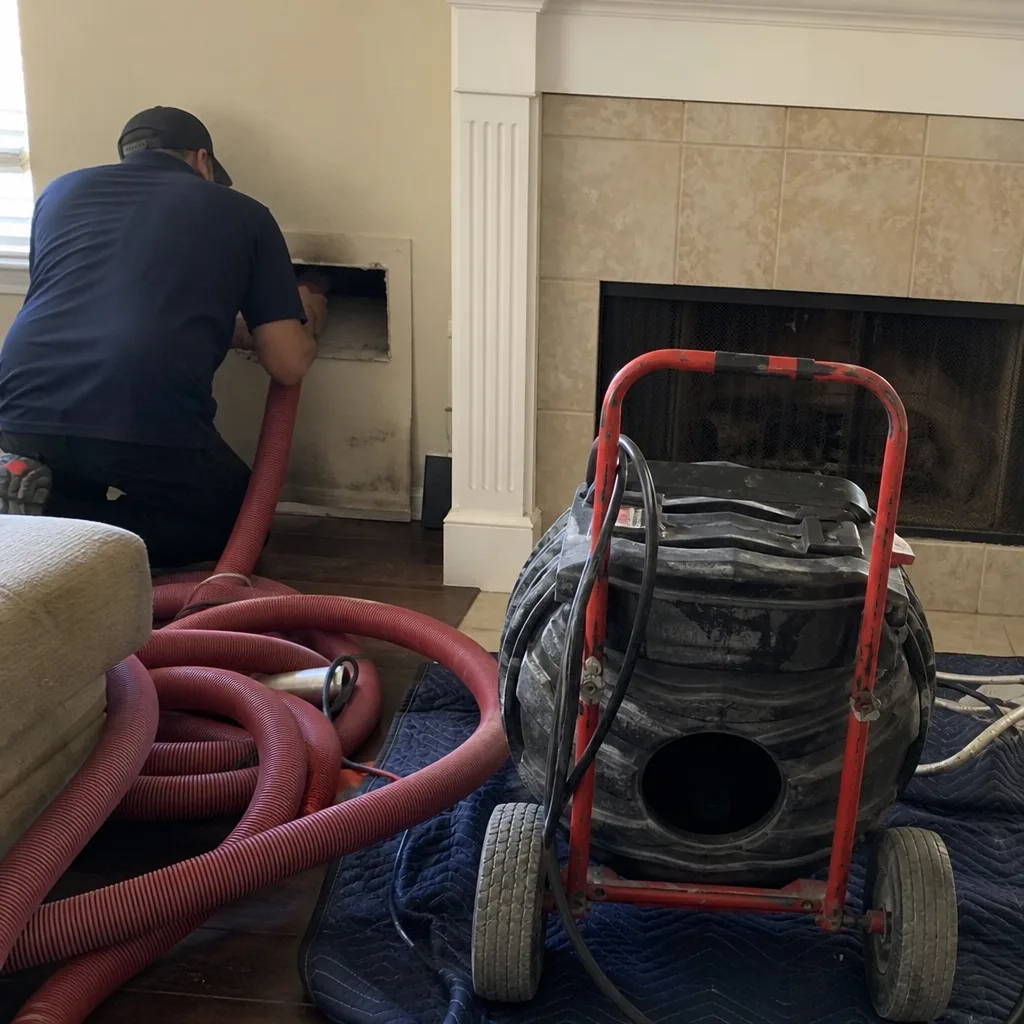 Before
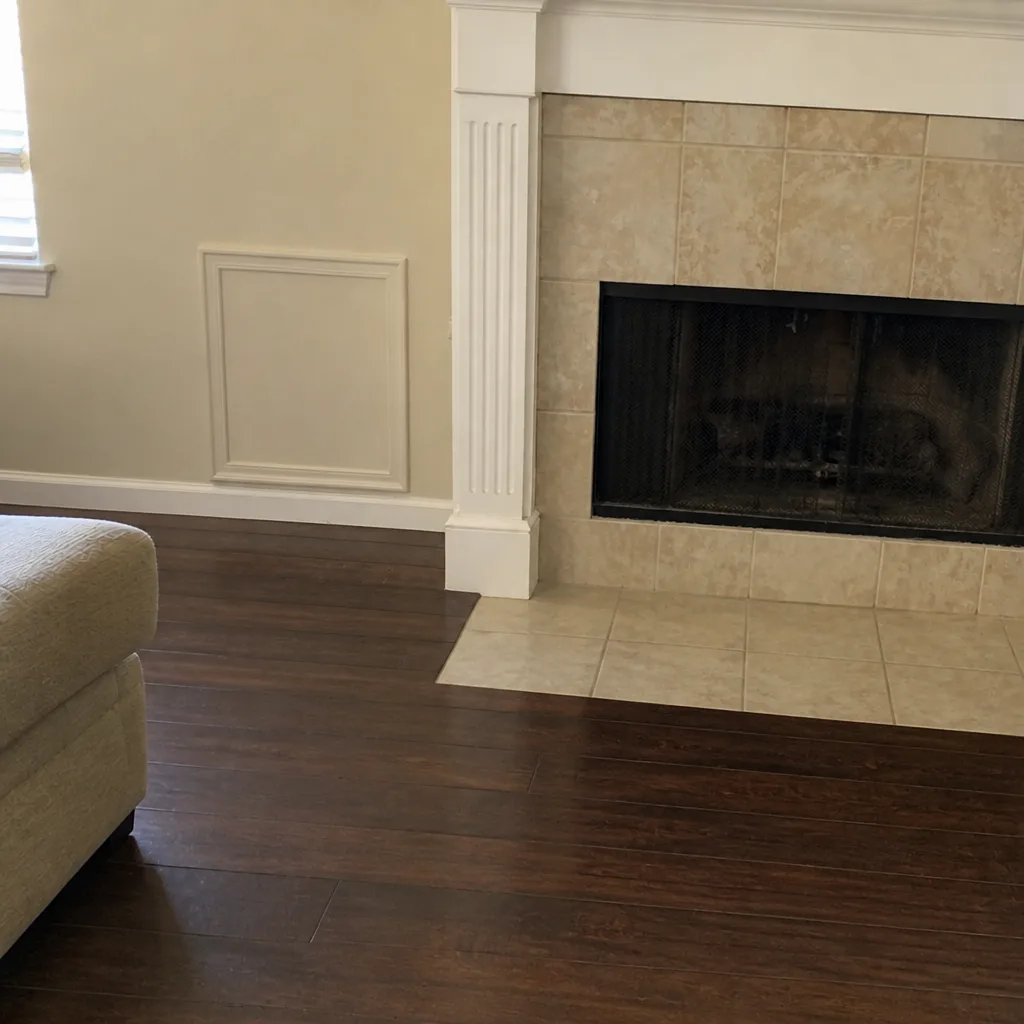 After
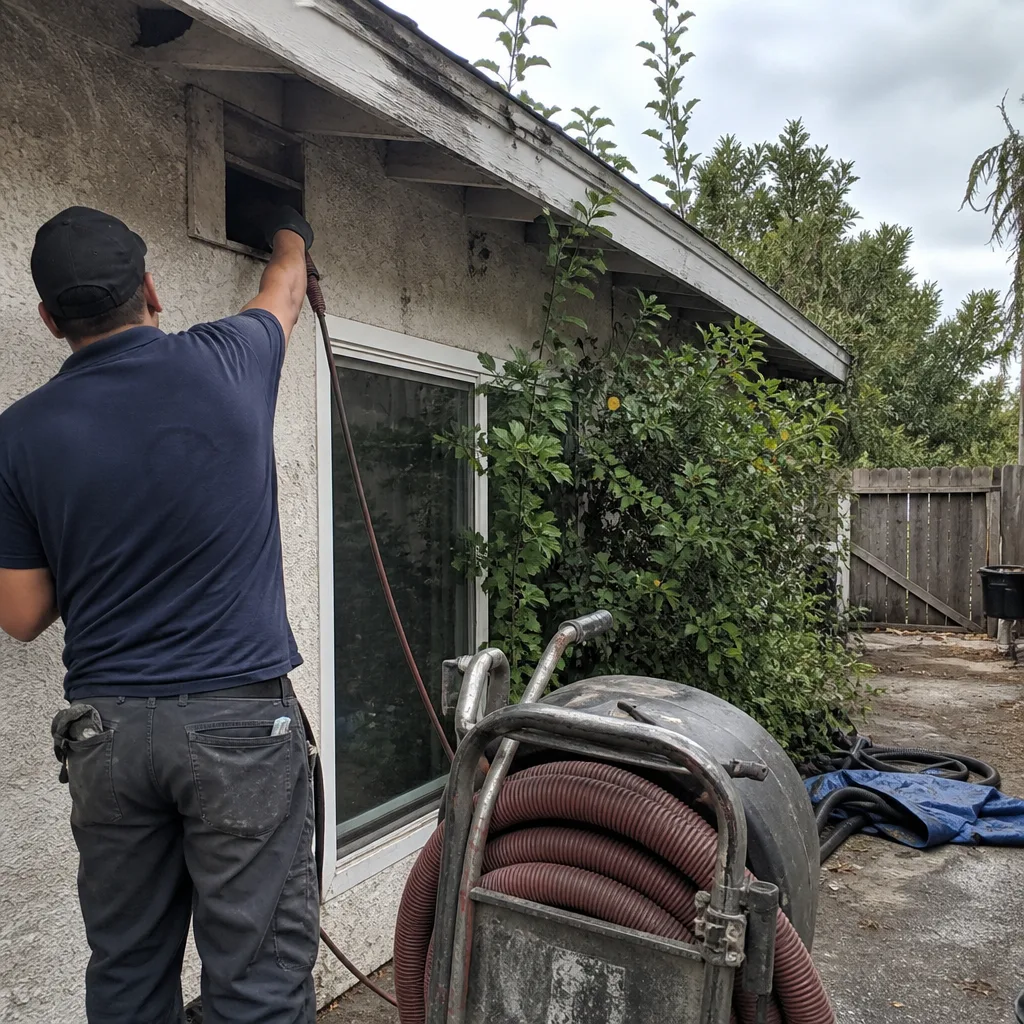 Before
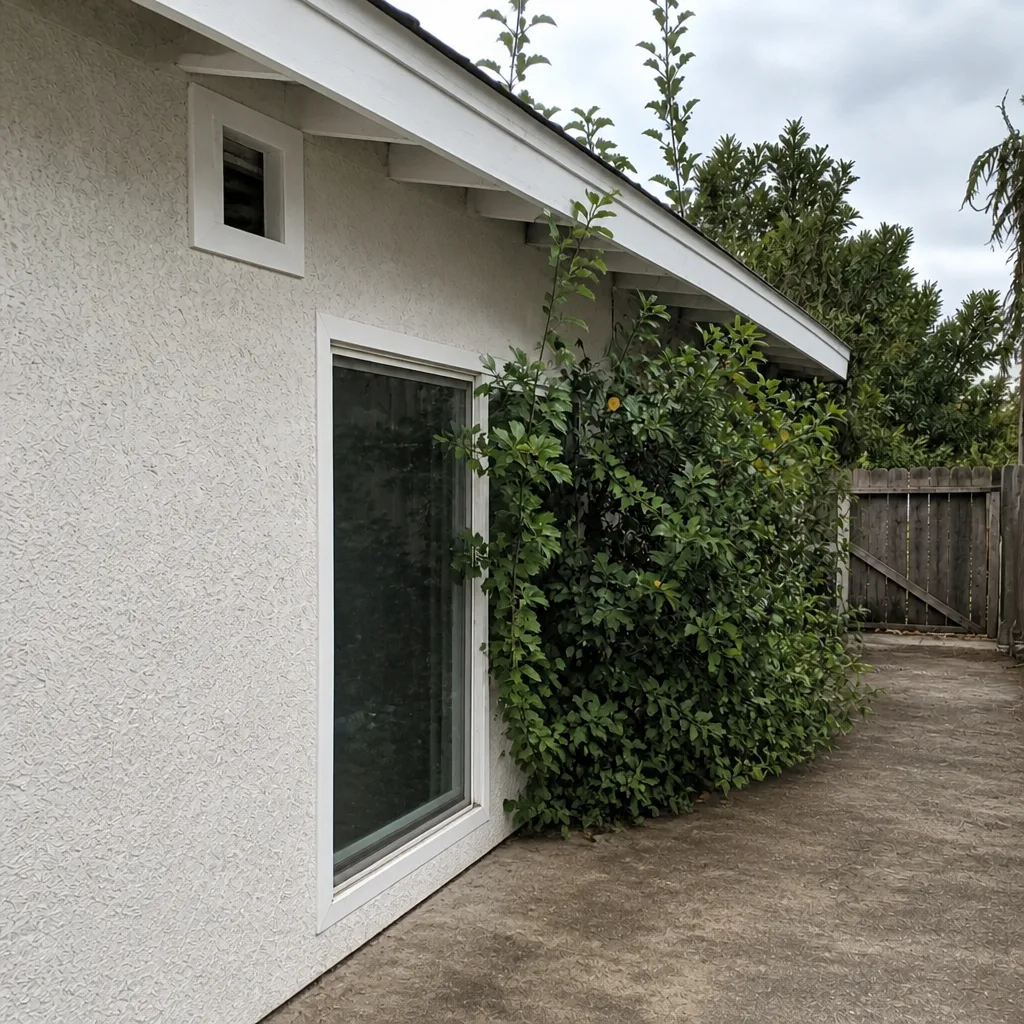 After
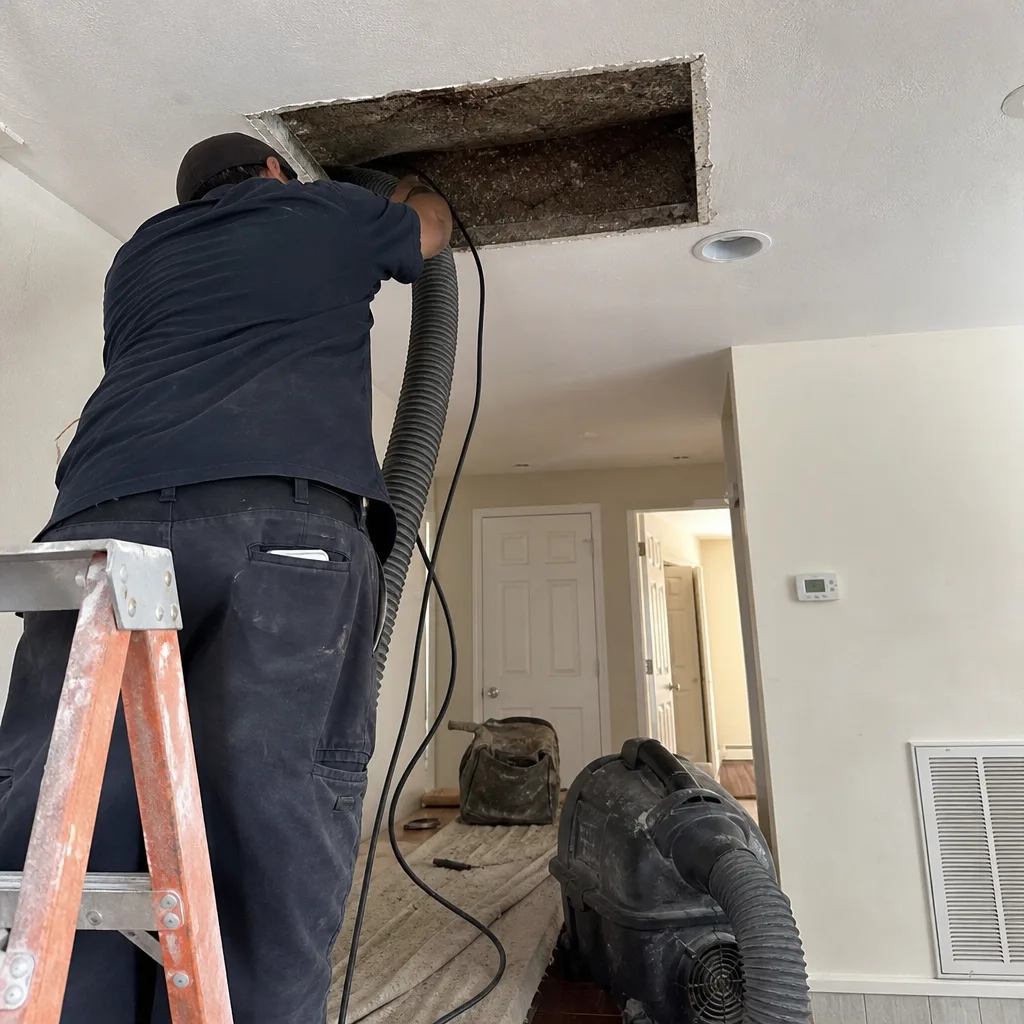 Before
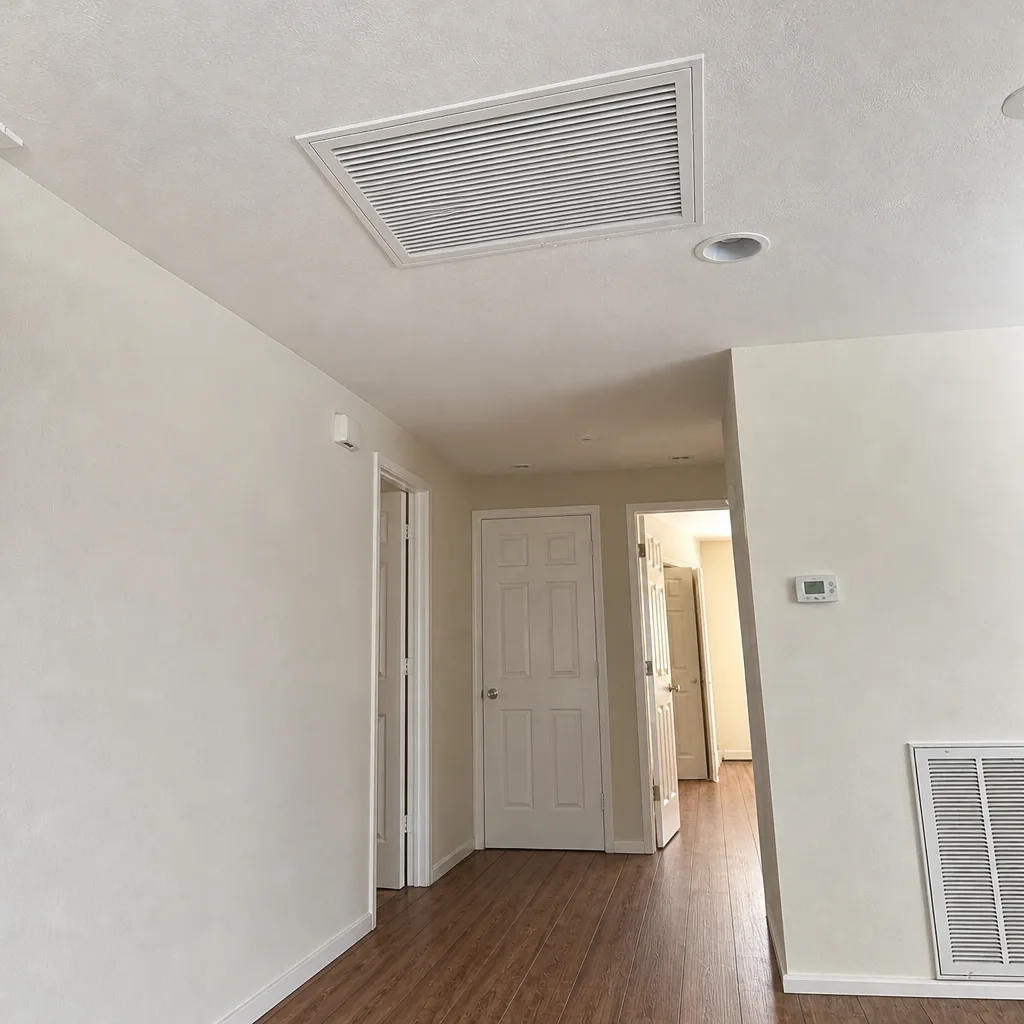 After
When to Call a Professional
There’s a point where the equipment questions stop mattering because the answer to “should I clean this at all” is clearly yes. You’ve noticed allergy flare-ups in the house that don’t track with the seasons. A musty smell shows up when the air comes on. Some rooms get airflow and others don’t. Your energy bills creep up and the AC works harder for less result. Or you can see dust building along the registers and the return grille. Those are signals worth a professional inspection, and they’re exactly the kind of signs a camera and a containment setup will confirm or rule out. Duct repair and sealing found during that visit is worth doing while the crew is there, not deferred. Placentia Air Duct Cleaning Pros offers free estimates in Placentia. Call (866) 937-8913. We answer 24/7, with fast dispatch from 7am to 7pm, Sunday through Friday. Estimates are free, and the price is set per job by the written estimate, one flat price per system agreed before work starts.
Frequently Asked Questions
The brands worth trusting in Placentia are Rotobrush, Nikro, Abatement Technologies, and RamAir, because each serves a specific role in a professional source-removal job. Rotobrush and Nikro are the professional portable systems used for residential duct cleaning; Abatement Technologies builds the negative-air filtration units that contain debris at the source; RamAir appears on higher-CFM truck-mount systems for larger properties. The brand matters less than whether the contractor can name it and explain why it was chosen for your system. Ask, and see whether the answer comes easy.
Air duct cleaning is priced per system, and the written estimate sets the final price, so we don’t quote a number over the phone before seeing the layout, the number of runs, and the condition. The honest approach to cost is a flat price per system agreed before work begins, not a per-vent figure that grows as the technician counts registers. If you’re comparing quotes, ask each contractor how their price is set and whether it can change once they’re on site. Call (866) 937-8913 for an exact quote, estimates are free.
You know the work was done when you receive before-and-after video of your own ductwork, captured with a push camera or borescope by the technician who did it. Pre-inspection footage shows what was found; post-cleaning footage shows it gone. A contractor without a recording camera can’t produce that, and you shouldn’t accept a verbal description in place of it. Ask for the video before you book, so you know the documentation is coming. Call (866) 937-8913 with questions about what your report will include.
Cheap quotes usually reflect cheaper equipment and a shorter process: a consumer-grade portable instead of a professional system, no containment, no camera, and a per-vent price that grows once the technician arrives. The low number is real; the coverage behind it isn’t. That’s the bait-and-switch pattern in this trade, and Placentia homeowners see it as often as anyone. Ask what equipment and what documentation the quote includes. Call (866) 937-8913 for an honest flat-price estimate per system.
No, an essential oil fogger is not the same as an EPA-registered sanitizer. An EPA registration number is assigned to products evaluated by the agency for their intended antimicrobial use; a fogger with essential oils has no such registration and no tested-efficacy claim behind it. Ask for the registration number on any sanitizer being applied in your home. It’s the only evidence you have. We use tested products from Honeywell and Aprilaire in our air quality work. Call (866) 937-8913 to talk through sanitizing options.
Use Aeroseal for leaks you can’t reach and mastic for joints you can, and use both if the inspection finds both kinds of leakage. Aeroseal is a patented injection process that seals the whole duct system from the inside without opening drywall, which is the right fit for a finished Placentia house where the runs are boxed in. Mastic is a durable brushable or trowelable fix for exposed seams in the attic or at the plenum. Tape is a temporary patch at best. Find the leaks first, then match the method to the location.
The Bottom Line
The brand of equipment a contractor uses is the most reliable signal you have before they arrive, because it’s the one thing about duct cleaning you can verify in advance. Rotobrush and Nikro systems signal a professional portable job. Abatement Technologies containment signals the debris isn’t going to end up in your air. A recording camera signals whether the work happened. An EPA registration number on the sanitizer signals tested antimicrobial use. Ask for each one, and get one flat price per system in writing before the work begins. Placentia Air Duct Cleaning Pros covers the full chain, from Placentia Air Duct Cleaning Pros, through cleaning, HVAC service, duct repair and sealing, and sanitizing, so a problem found in inspection can be fixed in the same visit.
Call (866) 937-8913 for a free estimate. We answer 24/7, with fast dispatch from 7am to 7pm, Sunday through Friday. The price is set per job by the written estimate.
Written by the team at Placentia Air Duct Cleaning Pros.