
Last updated November 23, 2026
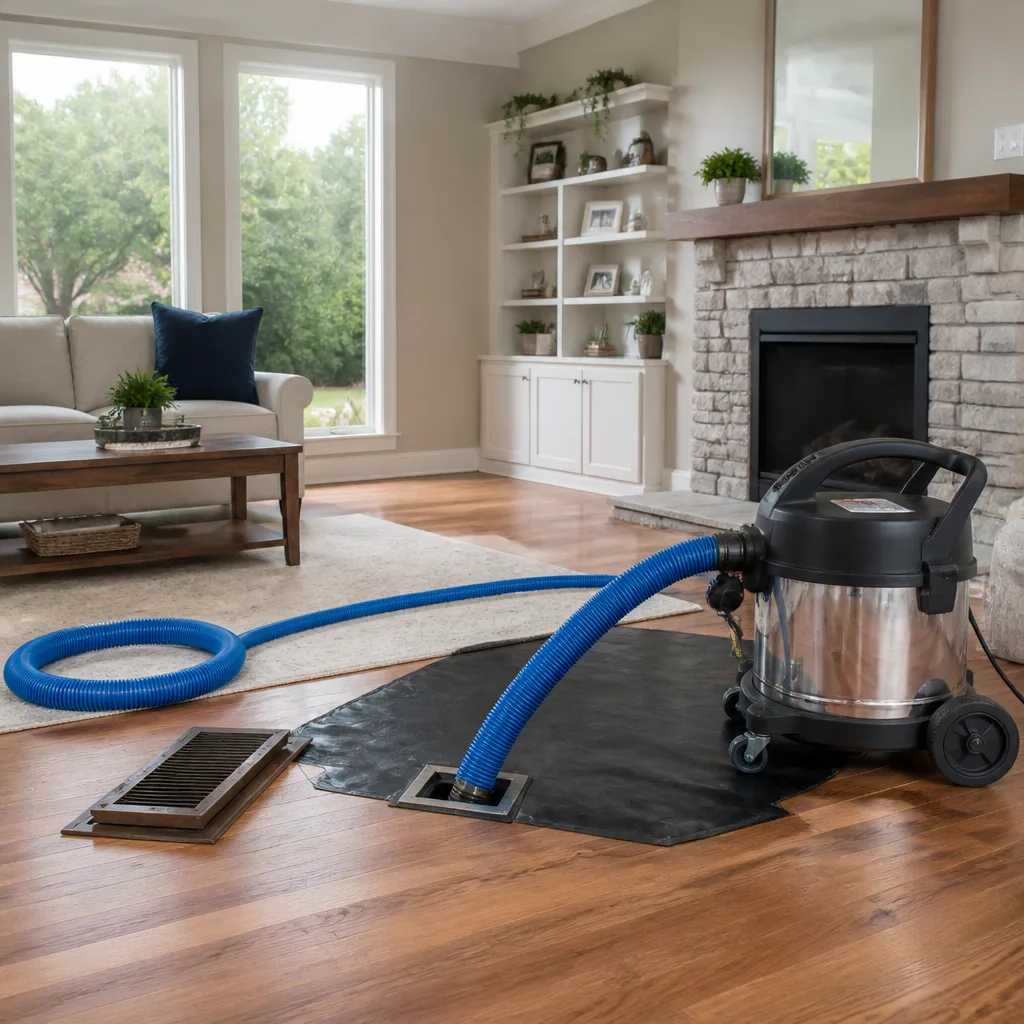 Whole-home duct cleaning
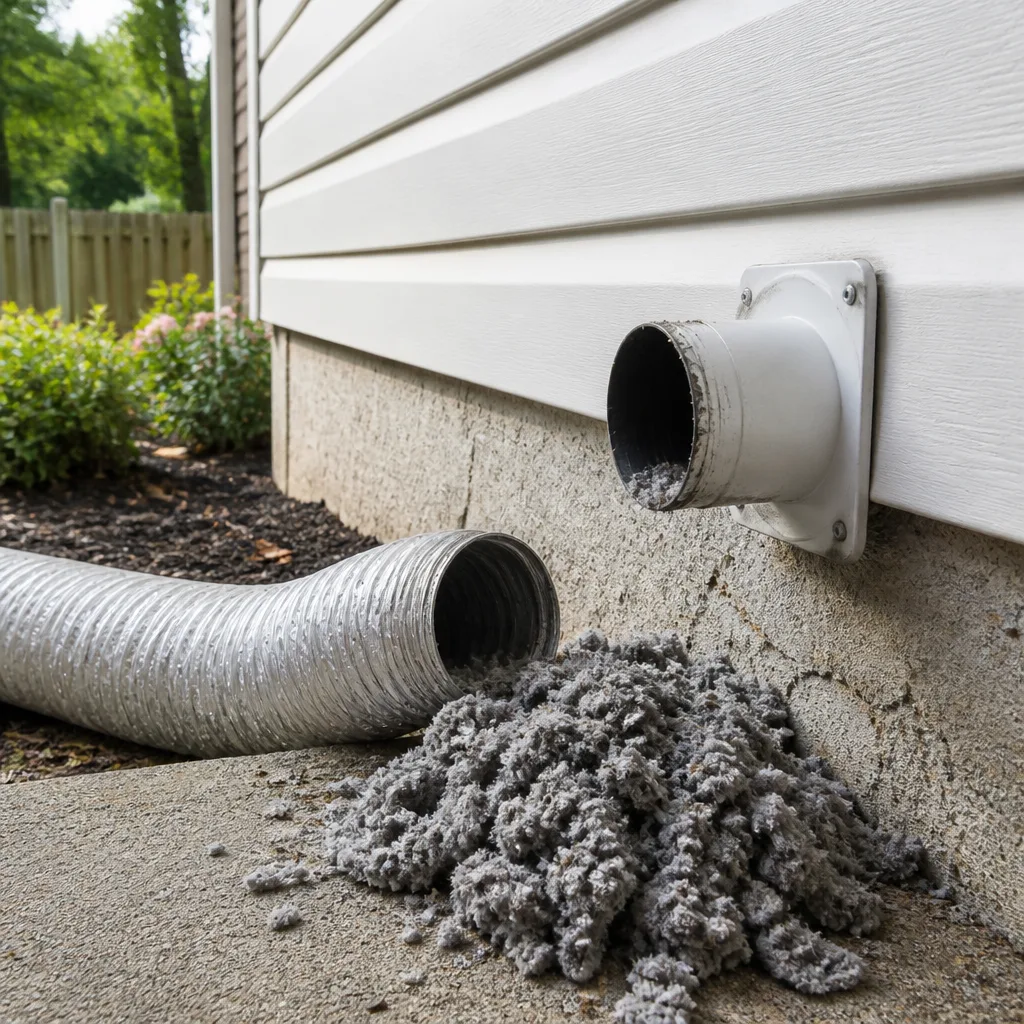 Dryer vent cleaning
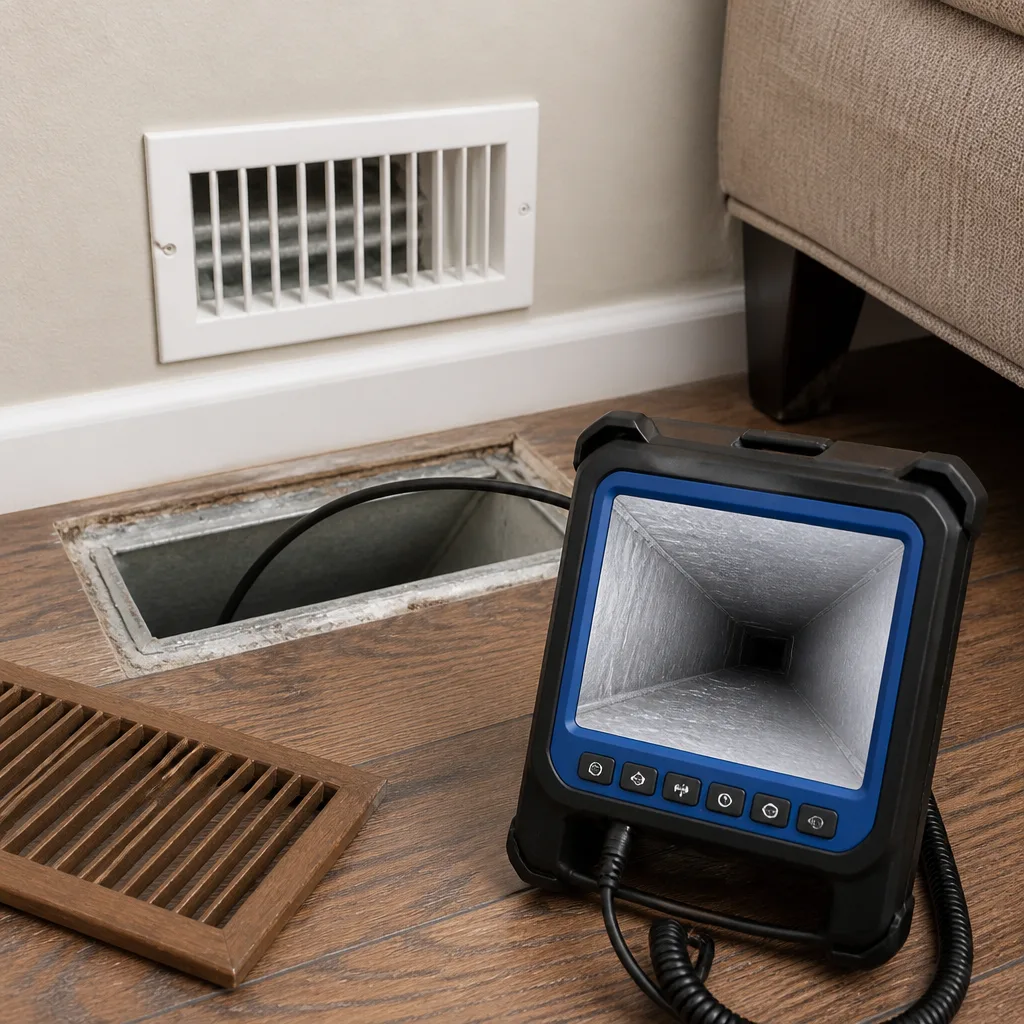 Camera inspection
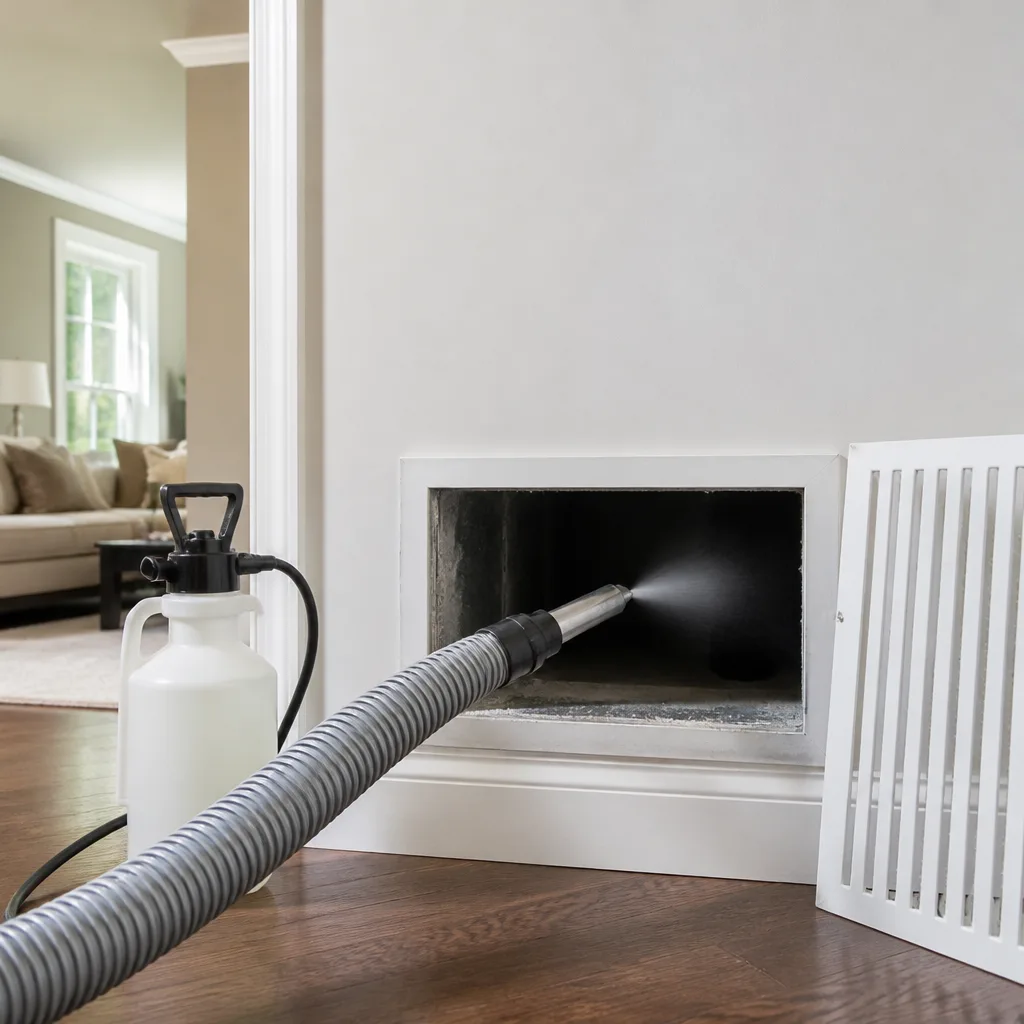 Sanitizing & deodorizing
Whole-system duct and dryer vent check with before-and-after photos - you see exactly what came out of your vents
That "$99 whole-house special" is a bait ad - the real number appears once they are in your hallway, or the "clean" is a shop-vac at the register. We photograph the inside of your ducts before and after instead.
Air Duct Cleaning Maintenance Checklist for Placentia Homeowners
Generic maintenance checklists tell you to replace your filter quarterly. They don’t account for the fact that a single Santa Ana wind event can push more particulate through a Placentia home in 48 hours than three normal months combined. That gap between advice and reality is where most duct problems quietly start. A filter swap doesn’t tell you whether your return plenum has pulled loose, whether a register boot has separated behind the drywall, or whether your supply trunk is leaking 20 percent of conditioned air into the attic before it ever reaches a bedroom. This guide gives Placentia homeowners a working schedule tied to our actual seasonal calendar, a way to spot degradation at the register before it becomes a repair bill, and a method for logging baseline airflow yourself so you know when something has changed.
Quick Answer
Most Placentia homes need a professional duct cleaning every three to five years, with a filter check once a month and a filter change every one to three months depending on the season and whether wildfire smoke has moved through the region. Your HVAC ducts should be cleaned at least once per cycle, and your dryer vent deserves a cleaning every one to two years. Homeowners who live near heavy traffic corridors or older homes with original flexible duct should lean toward the shorter end of every range. The monthly self-checks in this checklist are what determine whether you actually need a professional mid-cycle inspection before your next scheduled window.
Styles & brands we work with
- Whole-home duct cleaning
- Dryer vent cleaning
- Camera inspection
- Sanitizing & deodorizing
Table of Contents
- Why a Generic Duct Checklist Falls Short in Placentia
- Your Month-by-Month Duct Maintenance Calendar
- Which Visible Indicators Map to Which Duct Problems
- How to Log Baseline Airflow With a Cheap Anemometer
- How Duct Sealing Degrades in Placentia’s Temperature Swings
- Mid-Cycle Inspection vs. the Annual Service Window
- Filter Rules for Placentia Homes and What to Ignore
- Common Mistakes to Avoid
Why a Generic Duct Checklist Falls Short in Placentia
Placentia sits in a pocket of the North Orange County basin that catches the Santa Ana wind pattern head-on. When those winds flow from the interior toward the coast, they arrive dry, gusty, and loaded with fine particulate pulled from the Inland Empire and the pass communities. For a few days, the air outside a Placentia home carries enough suspended dust that a return grille will visibly darken within a week. Whether that particulate stays in your ducts depends on your filter quality and whether the system was running during the event.
Wildfire smoke adds a second layer to this picture. Southern California fire seasons have extended into months that used to be quiet, and when a large fire burns to the north or east of Orange County, the smoke plume doesn’t stop at a city limit. It reaches Placentia as fine ash and combustion byproducts that pass through a standard fiberglass filter without much resistance. Those particles settle in the supply runs and the return plenum, then get stirred back into the home every time the blower kicks on.
Then there’s housing stock. Placentia has a mix of mid-century tract homes built with early flexible duct and newer construction with tighter envelopes and more balanced systems. The two age classes fail differently. Older flex duct sags, tears at the collar, and collects fine debris at every low point. Newer systems lose balance and start moving air into rooms that aren’t calling for it. A checklist that doesn’t ask which kind of home you live in is only half a checklist.
- Santa Ana wind events: fine dust loads return grilles fast; plan a filter change immediately after.
- Wildfire smoke intrusions: trigger a visual inspection of the return plenum and supply registers.
- Older flexible duct: needs professional inspection every few years for sag and collar separation.
- Newer tight-construction homes: balance and airflow distribution matter as much as cleanliness.
Your Month-by-Month Duct Maintenance Calendar
This is the schedule we recommend for a typical Placentia home, adjusted for our actual seasons and the wind and fire calendars that dominate the region. You don’t have to do every item in a given month. The point is to build the habit around the times of year when your system faces the most stress.
- January: Change your filter at the start of the year. Note the return grille dust pattern. This is your baseline photograph for the rest of the year.
- February: Check the return grille for a visible dust ring. If it’s dark within three weeks, your filter is undersized or a return leak is pulling from the attic.
- March: Test each room’s register with a handheld anemometer (see the anemometer section below). Log the airflow numbers. This is the read you’ll compare against in summer.
- April: Change the filter again. Early spring in Placentia brings flowering pollen that loads filters faster than winter does.
- May: Inspect the dryer vent exterior flap for lint accumulation. If the flap doesn’t swing freely, the vent is overdue for a cleaning.
- June: AC season starts in earnest in Placentia. Walk the house and note any room that feels weaker than the others. Mark it for the July check.
- July: Check supply registers in the weak rooms for dust buildup and airflow drop. Compare with your March numbers.
- August: Change the filter and clean any pet hair off the return grille face. Peak cooling load means peak debris movement through the system.
- September: Pre-Santa Ana prep. This is the month to schedule a professional inspection if you haven’t had one in three years. Change the filter before the first wind event, not after. Check the exterior of the dryer vent again.
- October: Peak Santa Ana season in Placentia. Change the filter more often (every three to four weeks during wind events). Photograph any register darkening.
- November: If a fire has burned anywhere in the region, inspect the return plenum for visible ash. Look at the supply register faces for grayish residue that wasn’t there before.
- December: Post-smoke-season filter change. If registers show ash residue or the house has a musty smell, call for a professional mid-cycle inspection.
The exact dates shift year to year. The order doesn’t.
Which Visible Indicators Map to Which Duct Problems
Homeowners often assume a dusty register means a dirty filter. Sometimes it does. Frequently it doesn’t. The pattern and location of the dust tell you which part of the duct system is misbehaving. Here’s how we read them in Placentia homes.
Dust Rings Around a Register
A ring of dark dust on the drywall around the register frame usually means air is escaping past the register boot rather than coming through it. The boot collar has separated from the supply trunk, or the register gasket has failed. That escaping air carries dust and deposits it at the edge. A filter change won’t fix this. Duct sealing does.
Uneven Room Temperatures
If one bedroom runs three to five degrees warmer than the rest of the house no matter what the thermostat says, the cause is almost always a duct leak, a crushed run, or a damper stuck in the wrong position. A dirty filter would affect the whole house evenly. Uneven performance is a distribution problem.
Musty Odor at One Register
A musty smell only at one register, especially a register near a bathroom or laundry room, usually points to condensation inside that specific duct run. In Placentia’s mild winters we don’t see frozen lines, but a run routed through a cooler attic corner can sweat in summer. The fix is insulation or rerouting, not just a cleaning.
Gray Recurring Residue After a Fire Season
After a regional fire pulls smoke over Placentia, fine ash can settle in the return plenum and coat the interior of the supply runs. You’ll see it as a gray, chalky film on the register face that returns within a week of wiping it off. That’s smoke residue, and it needs a professional cleaning with high-efficiency filtration, not a shop vac.
- Dust ring around register: boot separation or gasket failure, not filter failure.
- Uneven room temperature: duct leak, crushed run, or damper position.
- Musty odor at one register: condensation in that specific run.
- Gray recurring residue after fire season: smoke ash settled in the plenum.
- Whole-house dust after a wind event: filter media loaded or filter bypass at the cabinet.
How to Log Baseline Airflow With a Cheap Anemometer
A handheld anemometer costs less than a routine supply purchase at most hardware stores, and it’s the single most useful tool a homeowner can own for duct maintenance. It gives you a number. Numbers let you detect degradation before it becomes a repair bill.
- Wait for a mild day with the system running in a steady mode. Don’t use a day when the outdoor temperature is swinging. Pick a time when the system isn’t cycling frequently.
- Set the thermostat to hold a constant setting. Fan on, temperature held. You want continuous airflow for the reading.
- Close all doors and windows. Set the house to its normal state. If any bedroom door is normally closed, close it during the reading too.
- Measure at the face of each supply register. Hold the anemometer perpendicular to the grille and about one inch away. Take three readings a few inches apart and average them.
- Record the room name, date, and average reading. A simple spreadsheet works. Photograph the anemometer display if that’s easier.
- Repeat the same routine on a similar weather day four to six weeks later. Same thermostat setting, same doors, same registers.
- Watch for a drop of more than 10 percent in any room. That’s the threshold we use to flag a partial blockage, a failing motor, or a separation in that branch.
The value here isn’t the absolute number. A room that reads 180 feet per minute on day one and 160 six weeks later under identical conditions is telling you something has changed. Absolute performance depends on your system size, so don’t compare across houses. Track your own.
If you do this for a full year, you’ll build a picture of your Placentia home’s real airflow profile. That profile is what a professional can analyze when you call. It’s a far more useful conversation than “it feels weak in the back bedroom.”
How Duct Sealing Degrades in Placentia’s Temperature Swings
Placentia’s mild winters are forgiving compared to mountain or desert climates. That mildness is deceptive. The day-to-night temperature swing in a Placentia attic is still significant, and over a decade or more that swing works mastic and tape seals loose. In summer, an attic can sit much hotter than the outdoor air. In winter mornings it can drop substantially. The duct system expands and contracts with every swing.
Every joint in the system – each collar, each elbow, each connection to a boot – is a potential failure point. Most fail slowly. You won’t get a catastrophic blowout. You’ll get a small gap at a seam that leaks a fraction of the supply air into the attic. That fraction grows. After several years, a system that started at 95 percent delivery is running closer to 75 or 80 percent.
What You Can Spot at the Register Level
- Warm supply air in summer: the air coming out of a register should feel noticeably cool. If it feels tepid, you may be losing cool air into a hot attic through a leak.
- Visible gap between the register frame and the drywall: this suggests the boot has pulled away from the ceiling or wall.
- Whistling at a register: escaping air through a gap creates a whistle.
- Rattling that changes with system cycles: a loose duct section vibrating against framing or a joist.
- Unexplained energy cost creep: a system that’s running longer to hit the same temperature.
What You Should Never Try to Fix Yourself
Duct sealing done at the register face is straightforward for a professional. Duct sealing done up in the attic, in tight spaces, around electrical junctions and gas lines and insulation, is not. If a leak is behind a finished wall or in a crawl space with electrical runs nearby, stop. This is not a homeowner job. The wrong tape or the wrong mastic on a joint near a gas appliance or a live electrical junction is a serious safety problem.
When a Placentia crew finds leaks during an inspection – and they will – the right move is to seal them during the same visit. A partial cleaning that leaves leaking joints and separated collars behind is a wasted service.
Mid-Cycle Inspection vs. the Annual Service Window
If you follow the calendar above, you’ll have one “annual service window” a year, usually in September before the wind events start. That’s the ideal time to schedule a professional air duct cleaning and inspection. But there are moments when waiting for the September window is wrong.
Call for a Professional Mid-Cycle Inspection If
- Your airflow readings drop by more than 10 percent in any room within a month.
- You see gray ash residue at any register after a regional wildfire.
- A musty or chemical smell appears at one or more registers and doesn’t clear in a week.
- A visible dust ring appears around a register inside 30 days of a professional cleaning.
- Your energy bill climbs more than 15 percent over the same month last year with no change in thermostat settings.
- Any family member’s allergy symptoms flare indoors and outdoor air quality is normal.
- Your HVAC blower starts cycling more often or running continuously.
Wait for the Annual Window If
- Your last professional cleaning was under three years ago and every reading is stable.
- You’ve done the monthly filter changes but the register dust pattern hasn’t changed.
- Your dryer vent pendulum test (described below) still swings freely with no lint accumulation.
For dryer vent timing specifically, one to two years is the right interval for most Placentia homes. Households that do a lot of laundry, or that have pets, should lean toward the shorter end. dryer vent cleaning removes a fire risk that most duct cleaners skip entirely, and it’s a standalone service you should schedule even if your air ducts aren’t due.
The Dryer Vent Pendulum Test
Step outside. Find the exterior dryer vent flap on the wall. Push it open with a finger. It should swing freely, and you should feel strong airflow escape when the dryer is running. If it sticks, rattles with a heavy click, or airflow is weak, lint has built up inside. That’s a sign to schedule a cleaning.
Filter Rules for Placentia Homes and What to Ignore
The “quarterly filter change” rule is the most repeated and least useful piece of duct advice. In Placentia, your filter needs depend on which season you’re in, whether a wind event just moved through, and whether any regional fire produced smoke. Here’s the schedule we recommend.
- Normal months (steady weather, no fire, no wind): check monthly, change every 60 to 90 days.
- Santa Ana wind months (typically October through November): check every two weeks, change at the start and end of every wind event.
- Wildfire smoke days: change the filter as soon as the smoke event ends, even if it’s only a few weeks after the last change.
- Spring pollen months: change every 45 to 60 days.
- High-efficiency MERV filters: these load faster. If you run a MERV 11 or 13 filter, check biweekly during stress periods.
What Your Filter Cannot Do
A filter catches what passes through it. It doesn’t clean what’s already settled in your ducts, and it can’t correct a leak. If the filter looks clean but the register is dusty, the dirt is entering downstream of the filter – through a boot separation or a return leak. That’s a duct problem, not a filter problem.
When a professional cleaning does happen, we deploy Abatement Technologies negative-air filtration on-site. That captures dislodged contaminants at the source rather than recirculating them through the home, and it matters in Placentia homes with tight construction or occupants who don’t react well to dust.
Common Mistakes to Avoid
- Changing the filter without checking the return plenum. Placentia homes with visible return grilles often allow air to bypass the filter at the cabinet. A new filter won’t fix a bypass.
- Using a shop vac on a duct register. Consumer vacuums recirculate fine particulate into the room. Professional-grade equipment like Rotobrush is designed for this work; a shop vac will leave the contamination in the air.
- Skipping the dryer vent because “it looks fine.” Dryer vents are a fire hazard, not a minor chore. Lint builds invisibly along the run, and the exterior flap test above is the only visible check most homeowners have.
- Waiting until a Santa Ana wind event starts to change the filter. By the time the wind is blowing, the load is already arriving. Change before, then again after.
- Assuming HVAC ducts and air ducts are separate service calls. They aren’t. A partial cleaning that leaves the air handler, coil, and blower dirty doesn’t solve the problem. Full-scope service means cleaning the whole chain in one visit.
- Ignoring small register dust rings after a professional cleaning. A ring appearing within weeks of a cleaning is a signal that a joint failed, not that the cleaning missed a spot. Call and have it inspected.
- Trusting a low coupon price that becomes a larger invoice on-site. Ask up front for one flat price per system, no per-vent pricing, and before-and-after photos of your own ducts. Nothing else is verifiable.
See the difference
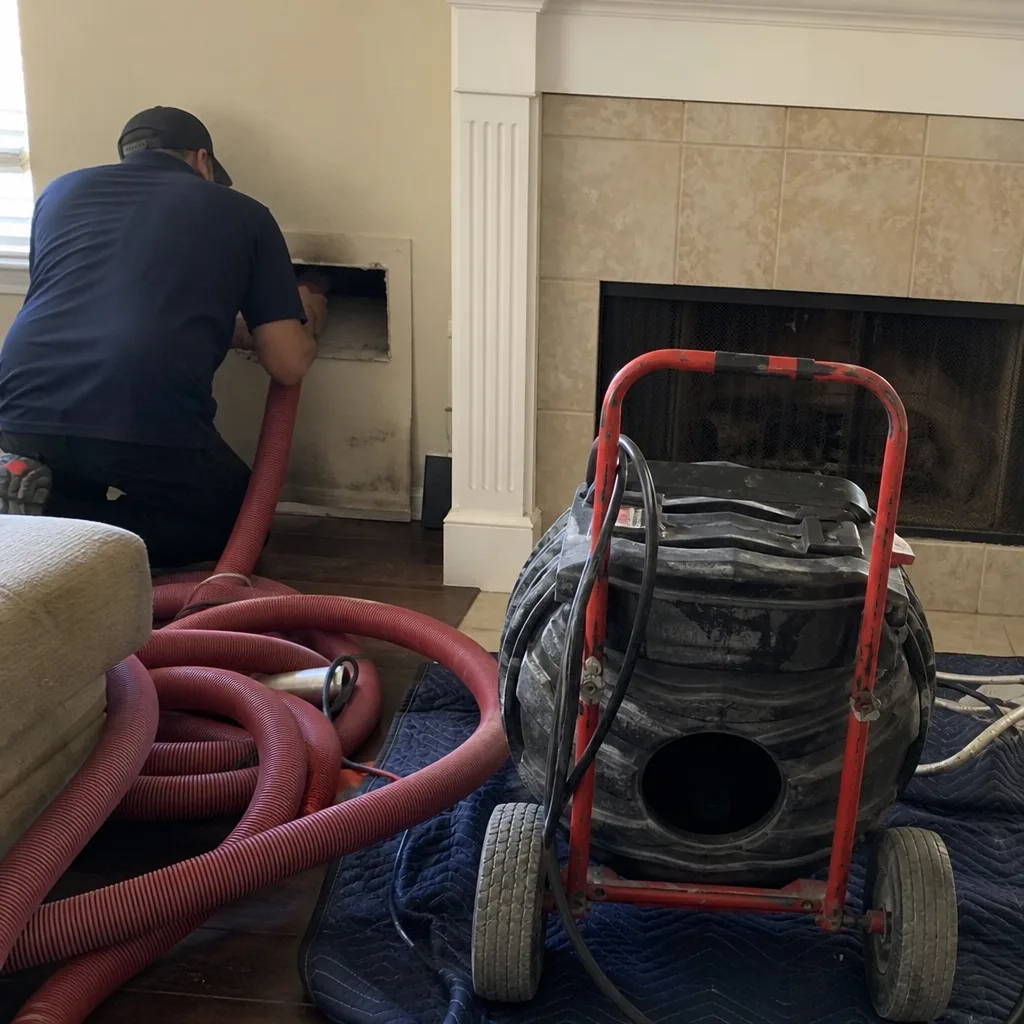 Before
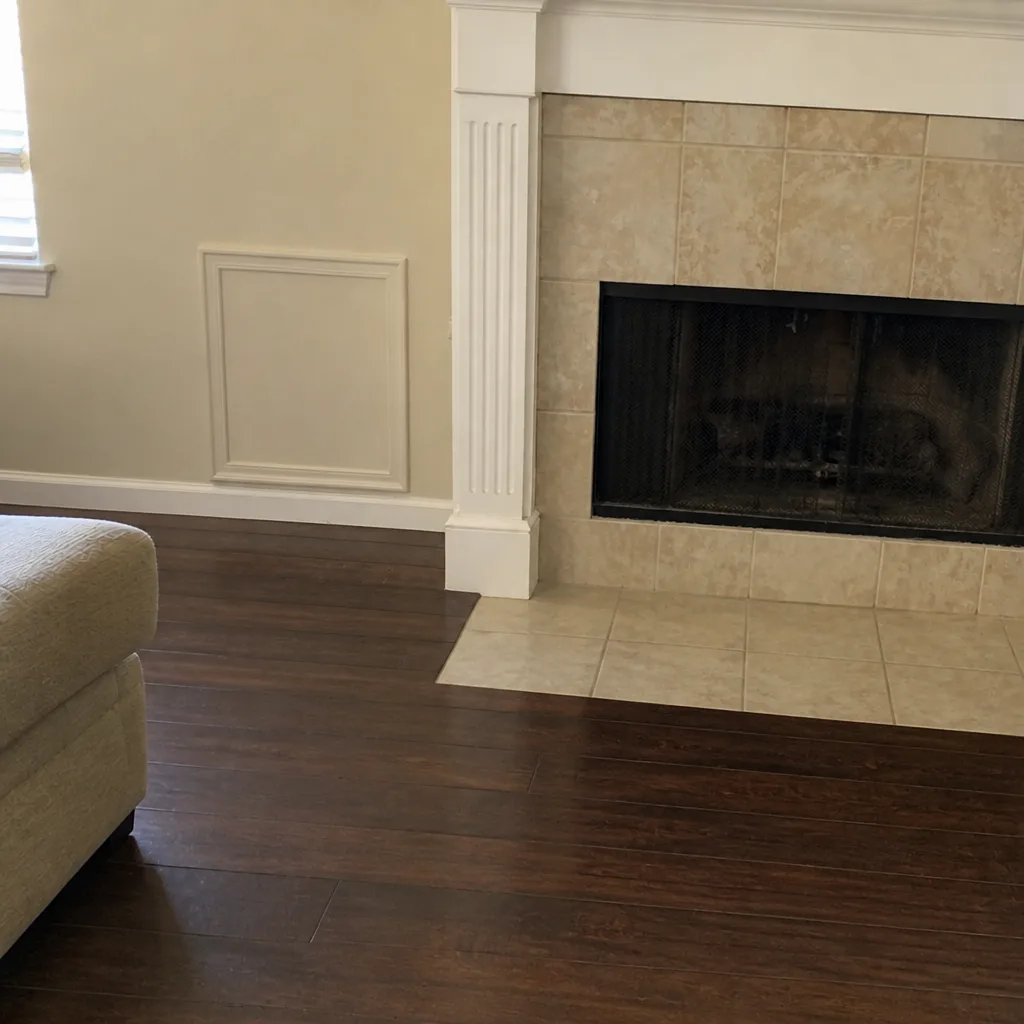 After
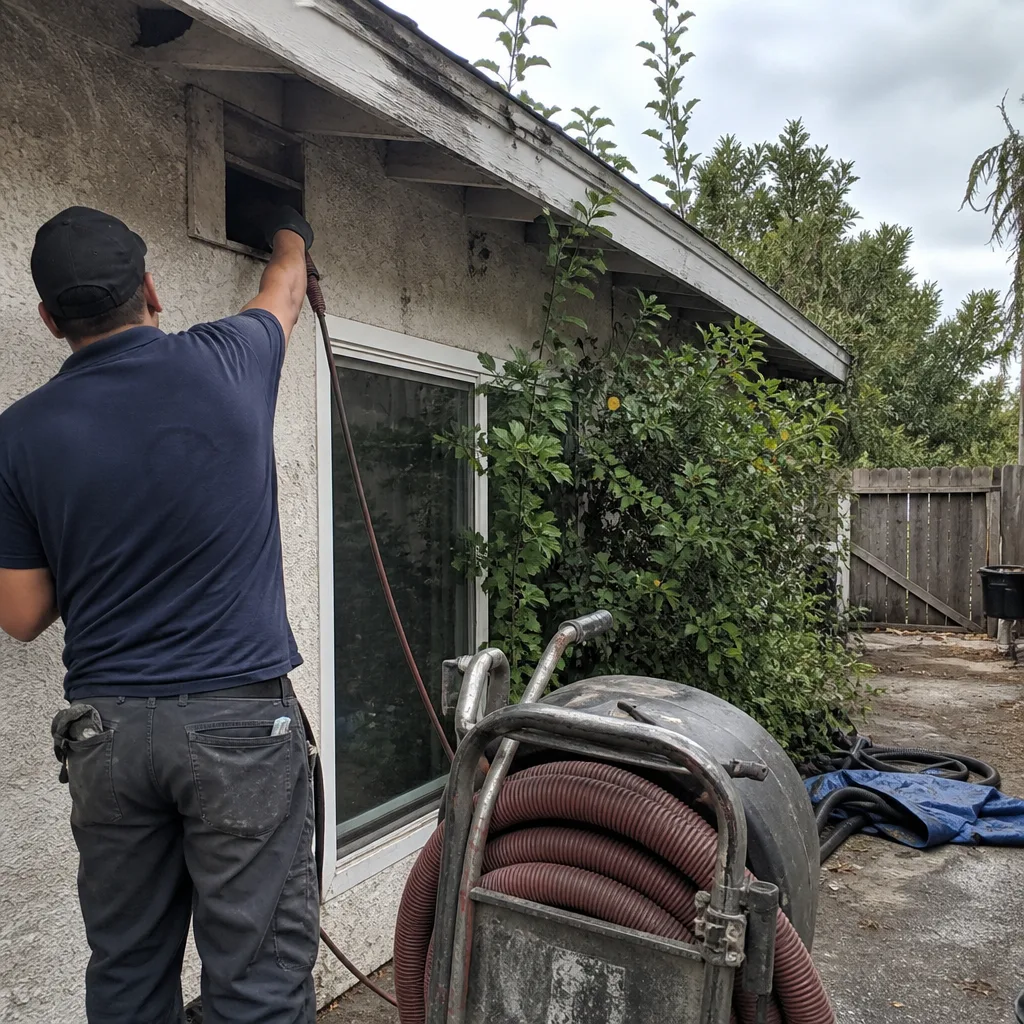 Before
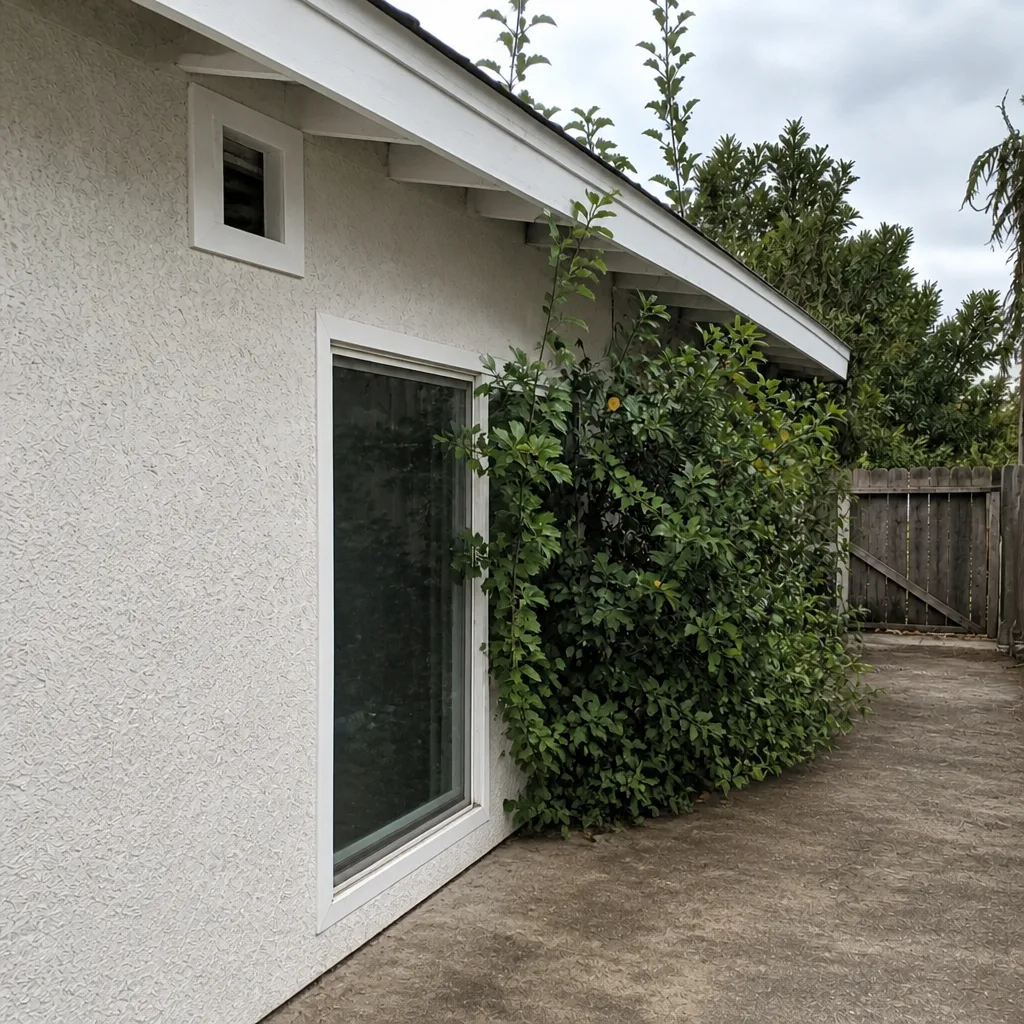 After
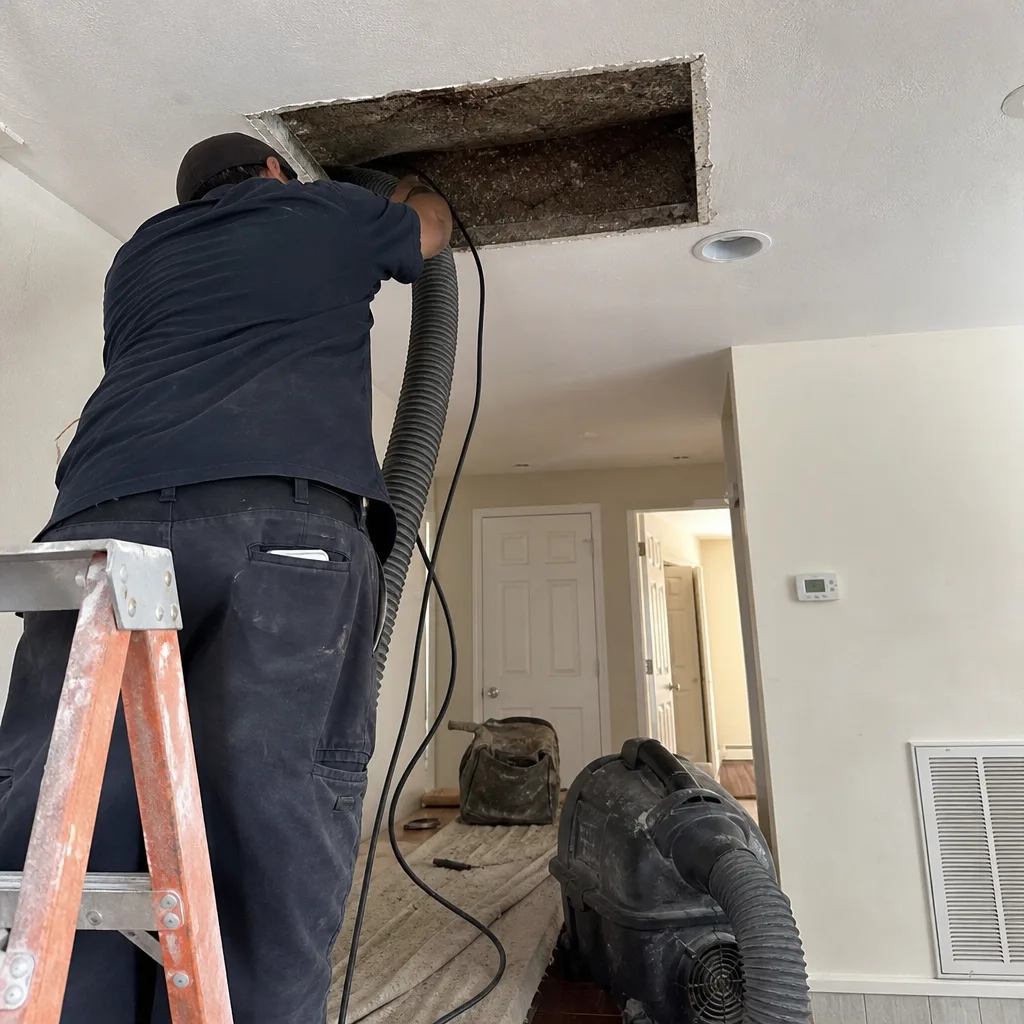 Before
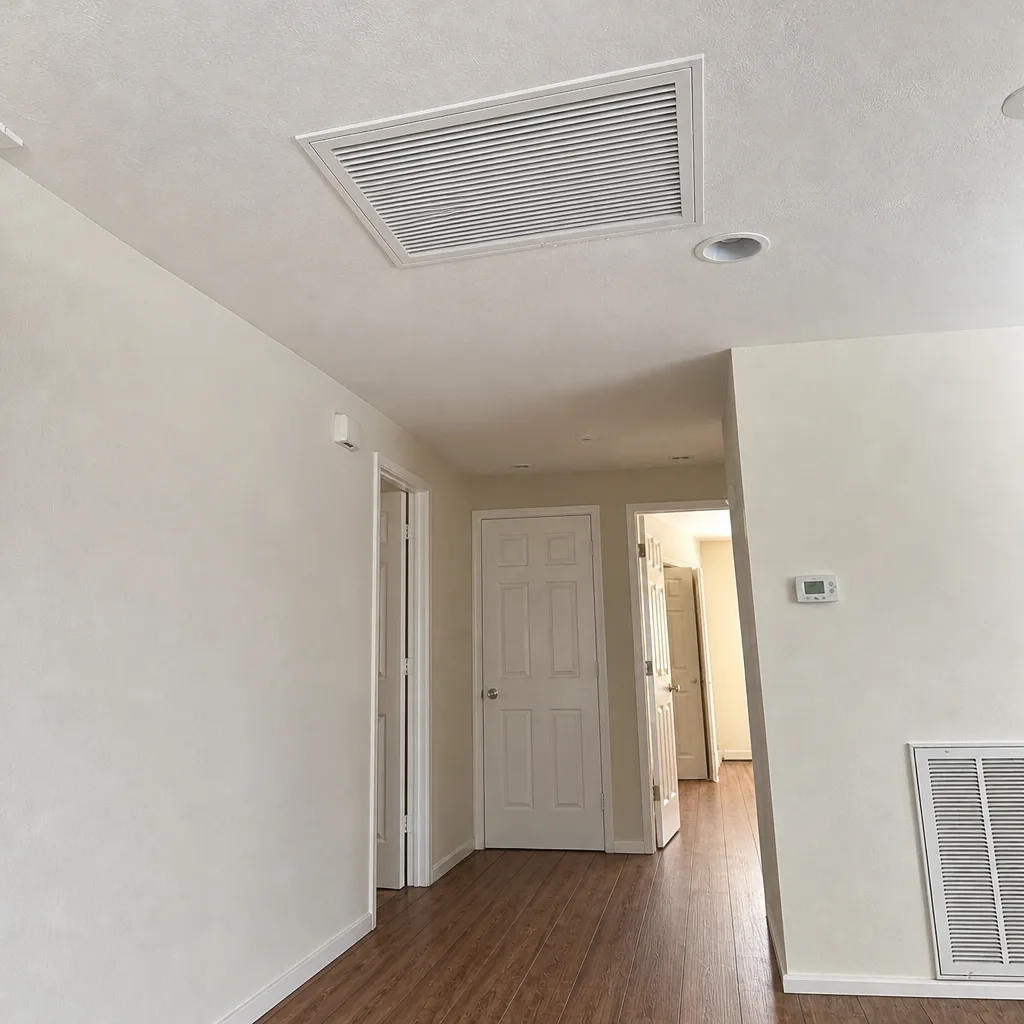 After
When to Call a Professional
Call us when the checklist tells you something is wrong, not just when the calendar says it’s time. The triggers that most often justify a call: a visible dust ring returning within a month of cleaning, airflow readings dropping more than 10 percent, a musty smell that persists at one register, a gray ash residue after regional wildfire smoke, a dryer vent flap that won’t swing freely, a room that runs several degrees off from the rest of the house, or an energy bill climbing with no other explanation. Our technicians have up to 12 years of experience reading the equipment and the home together, and we’ll tell you honestly whether you need us now or at the annual window. We clean it, repair it, and seal it in one visit so you aren’t booking a second contractor. Placentia Air Duct Cleaning Pros offers free estimates in Placentia – call (866) 937-8913.
Frequently Asked Questions
Most Placentia homes need professional air duct cleaning every three to five years, with a self-check every month and a professional inspection at least once a year. Homes near traffic corridors, homes with original flexible duct, and homes that have gone through a heavy wildfire smoke season should lean toward the shorter end of that range. After a significant regional fire, add a mid-cycle inspection regardless of the calendar. Call (866) 937-8913 for an exact quote – estimates are free.
Air duct cleaning pricing in Placentia depends on the number of systems, the number of runs, and whether the job includes HVAC coil and blower cleaning or sealing work. We price per system, not per vent, and we give you one flat price agreed before any work starts. Ask for before-and-after photos of your own ducts so you can verify the outcome. Call (866) 937-8913 for an exact quote – estimates are free.
Cheap quotes are usually partial jobs. They cover a surface pass on the visible ducts and skip the supply plenum, the return plenum, the air handler, and any sealing or repair work. Per-vent pricing makes the headline number look small and the final invoice look large. Ask for one flat price per system, ask for before-and-after photos, and ask whether the quote includes the coil and blower. Call (866) 937-8913 for an exact quote – estimates are free.
Before-and-after photos of your own ducts are the simplest verifiable proof. Beyond that, you can feel the difference at the register: airflow should feel stronger if the system was blocked or leaking, and the whole-house dust pattern should drop within a few weeks. If your anemometer readings don’t move, ask why. Call (866) 937-8913 for an exact quote – estimates are free.
Every one to two years for a typical Placentia household, and closer to once a year if you do a lot of laundry or have pets in the home. Check the exterior flap monthly. If it won’t swing freely or airflow feels weak, don’t wait for the annual cycle. Dryer vents are a fire hazard, not a minor chore. Call (866) 937-8913 for an exact quote – estimates are free.
Both, ideally in the same visit. Duct cleaning without HVAC cleaning leaves the coil and blower carrying the contamination you just removed, and the ducts pick it up again within months. HVAC cleaning handles the air handler side of the system. Full-scope service, where Placentia Air Duct Cleaning Pros cleans, repairs, seals, and sanitizes in one visit, is what prevents the contamination from coming right back. Call (866) 937-8913 for an exact quote – estimates are free.
The Bottom Line
A working checklist for a Placentia home is built around our actual seasons, not a generic quarterly rule. Santa Ana wind events and regional wildfire smoke drive more particulate into your ducts than any other source, and the September-to-November window is when you need to be paying attention. Learn your register patterns, log your airflow with a handheld anemometer, and treat every dusty register as a signal about your duct system rather than a filter problem. Call us for a free estimate when the readings tell you something has changed. We answer 24/7. Fast dispatch from 7am to 7pm, Sunday through Friday.
For an exact quote on any of our services, call Placentia Air Duct Cleaning Pros at (866) 937-8913. The estimate is free, the price is set per job by the written estimate, and the local pro is licensed and insured as the state requires. We answer 24/7. Fast dispatch from 7am to 7pm, Sunday through Friday.
Written by the team at Placentia Air Duct Cleaning Pros.