
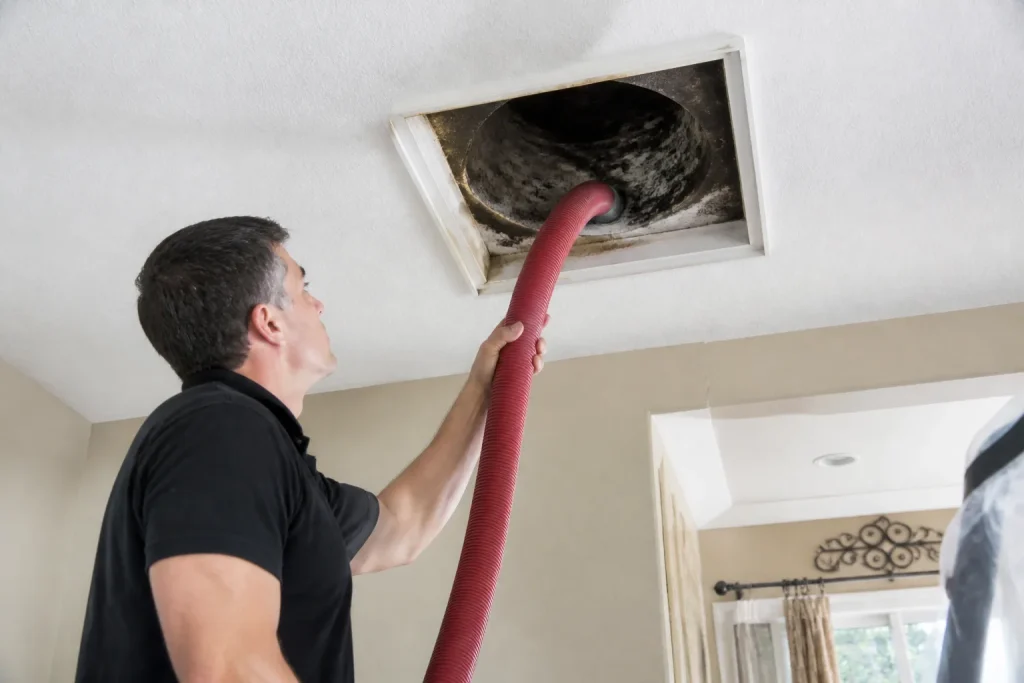
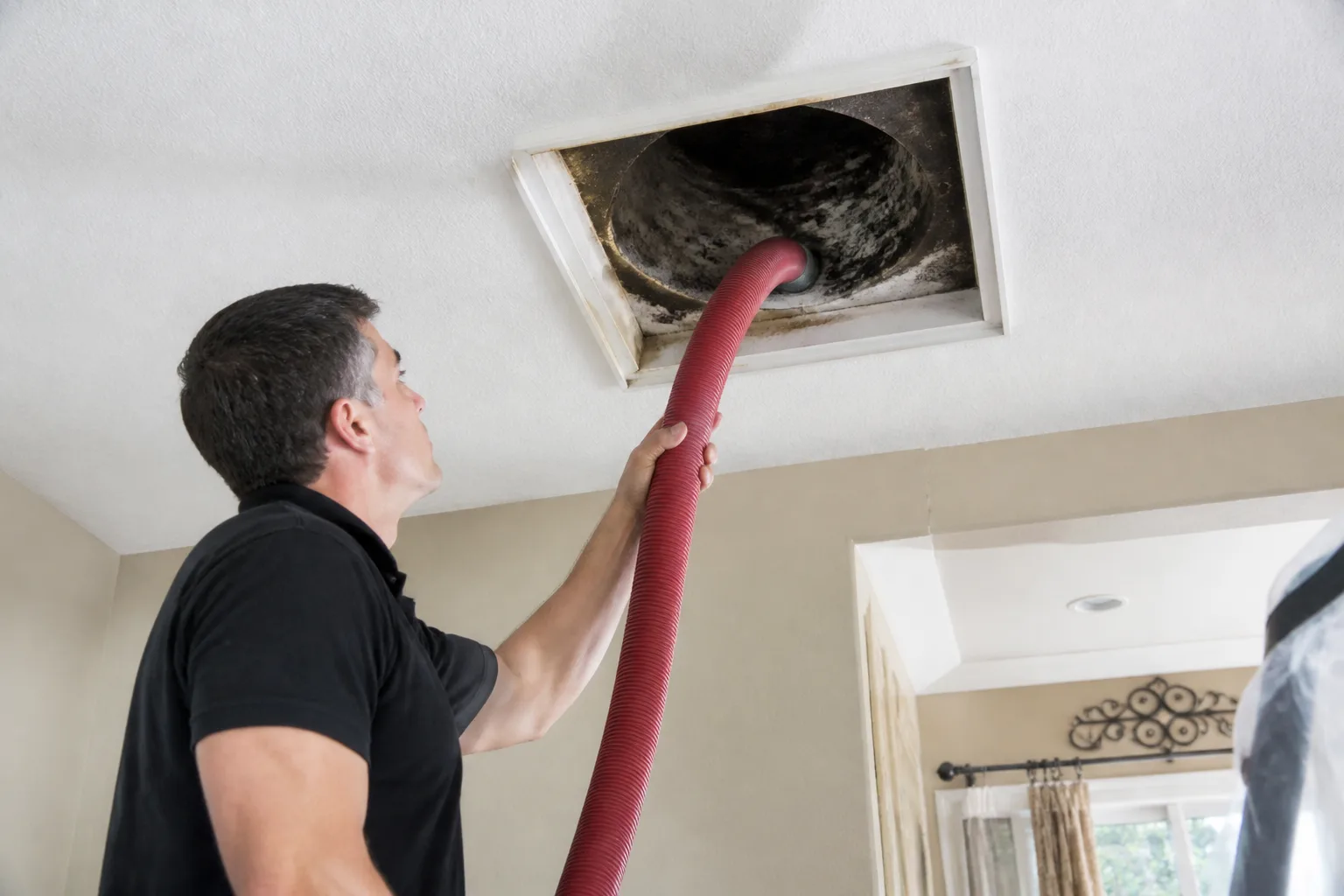
Top Signs You Need Air Duct Cleaning Service – Don’t Ignore These
Most homeowners start looking into duct cleaning when they can already see dust blowing from a vent. That’s the problem: visible dust is a late signal, not an early one. By the time debris is puffing out of your registers in Placentia, the duct lining and trunk lines have usually been collecting buildup quietly for a couple of years. The useful signs show up earlier, and they’re mechanical and structural. Here’s how to read them in the right order.
If you’d rather have someone look instead of climbing around with a flashlight, call (866) 937-8913. We answer 24/7. Fast dispatch from 7am to 7pm, Sunday through Friday.
Key Takeaways
- Uneven airflow and longer HVAC cycles are earlier warnings than visible dust.
- Placentia’s dry Santa Ana wind seasons push more dust into ducts than the milder coastal climate nearby.
- Rodent droppings, gnawed insulation or an ammonia smell need a different response than routine dust.
- Drywall dust after a renovation damages duct liner and equipment, and on its own can justify cleaning.
- You can check your own return air plenum with a flashlight and a phone camera before calling anyone.
What Are the Early Mechanical Signs You Need Duct Cleaning?
The first signs are things your HVAC system does, not things you see. When a supply run or a trunk line is partly blocked or coated with debris, the blower has to work against more resistance. You notice it as rooms that never quite heat or cool, a system that seems to run and run, and filters that clog faster than the interval printed on the package. If one bedroom is always a few degrees off while the hallway is fine, that’s a duct issue more often than a thermostat issue.
Watch for these early mechanical signals in Placentia homes:
- Room-to-room temperature swings. A weak register in one room, strong in another, points to a restriction in that branch run.
- Longer run cycles. The system reaches temperature slowly and shuts off late. Reduced airflow means longer runtime, not a failing unit.
- Filters clogging ahead of schedule. A filter that used to last months and now loads up in weeks is telling you debris is moving through the return.
- Whistling or whooshing at registers. A change in airflow sound usually means a restriction or a disconnected joint.
- Dust settling on horizontal surfaces right after cleaning. That’s circulating particulate, and the return side is the usual source.
These are root-cause signals. Catching them early is cheaper than waiting for the visible stage, because the same inspection that finds the restriction can confirm buildup along the trunk lines. Our technicians have up to 12 years of experience reading exactly this kind of airflow pattern, and the fix follows the inspection.
Why Does the Placentia Climate Make Duct Buildup Worse?
Placentia sits inland enough that the dry Santa Ana wind seasons hit harder here than they do in the coastal parts of Orange County. Those offshore winds are dry, warm and loaded with fine grit. When they blow for days, the particulate finds its way through every gap the envelope allows, and your return air pulls it straight into the duct system. Coastal cities get some of that, but their air holds more moisture and their wind events are milder. In Placentia the dust load per season is simply heavier.
What that means practically:
- Santa Ana seasons matter more than the calendar. Buildup concentrates around the dry wind months, so a cleaning timed after them catches the accumulation at its peak.
- Inland dust is fine and sticky. The grit that comes in on dry wind clings to the duct liner instead of falling back down a vertical run.
- Newer subdivisions see it too. Newer homes around Placentia are tight, which is good for energy bills and bad for dust that has nowhere to settle but the ducts.
- Frequency depends on your house. A household with pets, nearby construction or open windows through the wind season will need attention sooner than a quiet, filtered home.
We don’t guess at this. Professional-grade equipment, not a shop vac and a hose, is what removes the fine grit the Santa Ana seasons deposit. We run Rotobrush and Nikro systems that agitate and extract the liner the way commercial HVAC contractors do, and we set up Abatement Technologies filtration on site to capture what gets dislodged rather than recirculating it into your living room.
What Do Rodent Signs in Your Ducts Actually Look Like?
Rodent activity is a separate problem from dust, and it needs a different response. Droppings inside or around vent covers, gnawed insulation on exterior duct runs, and a sharp ammonia smell coming from supply registers are the three clear indicators. The ammonia smell is the one people misread as “musty.” It isn’t. It’s a rodent marker, and it means animals have been inside the system, not just near it.
Why rodents and ducts go together in Placentia: the flexible duct runs in a lot of local attics and crawl spaces are warm, dry and easy to chew into. A gap at an exterior connection is an open door. Once inside, an animal leaves droppings and damaged insulation, and the contamination is no longer plain dust.
What to do about it:
- Don’t run the system on a hunch. If you smell ammonia at a supply register, shut the fan off until it’s inspected.
- Treat damage, not just debris. Gnawed insulation and torn connections need repair, not a pass with a vacuum. That’s why we clean it, repair it, and seal it in one visit.
- Contain the work. Rodent-contaminated ducts are handled under negative air with Abatement Technologies filtration so the debris is captured at the source.
- Check the exterior runs. Insulation damage on outdoor duct runs lets air and pests both in, and sealing it closes the loop.
If you’ve found droppings near a vent, don’t handle it as a routine cleaning. Call us and describe what you saw. A different remediation approach is required, and it’s better to know that before anyone starts work.
Why Does Post-Renovation Drywall Dust Justify Immediate Cleaning?
Drywall dust is the one contaminant that can justify cleaning without waiting for any other sign. It’s abrasive, extremely fine, and it coats duct liner and the blower wheel in a way ordinary household dust never does. Construction dust pulled into the return during a remodel settles across the whole system, and running the HVAC during the work spreads it further. Left in place, it abrades the liner and loads the equipment.
What a renovation puts into your ducts:
- Gypsum and silica particulate. Fine enough to pass a standard filter and coat the inside of the trunk lines.
- Sawdust and insulation fibers. Heavier, but they collect in low spots and on the blower wheel.
- Adhesive and solvent fumes. These bond to surfaces and are part of why a fresh renovation can smell for weeks.
That combination is exactly why professional-grade equipment matters after a remodel. A shop vacuum moves some of it and stirs the rest. We use Rotobrush and Nikro extraction to pull the abrasive material off the liner, and Abatement Technologies filtration to keep it out of the air while it’s loosened. If your renovation is finished, this is the moment. If it’s still underway, sealing off the return during dusty work saves a lot of the problem.
How Do You Check Your Own Ducts Before Calling Anyone?
A flashlight and your phone camera will tell you more than a glance at a vent cover will. This is a look, not a repair. Don’t remove duct panels or reach into the system; just inspect what you can see safely.
- Pop off a floor or wall register. Shine the light down the run. A light film is normal. A thick, matted layer or debris you can see from arm’s length is not.
- Photograph the return air plenum. The return is where everything collects first. Fewer restrictions mean more debris visible there.
- Look for streaks at the register frame. Dark lines around the edges mean air is pushing dust through the seams, which is a sign of volume behind it.
- Check the filter slot. If the slot itself is grimy, debris is moving past the filter and into the equipment.
- Sniff the supply registers. Musty, dusty, or sharp ammonia – the last one needs an inspection, not a cleaning guess.
What your camera shows on the return plenum tells you most of what you need to know. Dust film and a bit of grit are mild. Piles of material, damage, or visible liner wear are not, and those are the cases where the inspection that starts the job also finds the seal and repair work. We clean it, repair it, and seal it in one visit, so what the camera finds can be corrected rather than noted and deferred to a second contractor.
Don’t Overlook the Dryer Vent
Your dryer vent has its own warning signs and its own consequences. A load that takes two cycles to dry, the dryer cabinet feeling hot to the touch, a lint trap that stays clean while the exterior flap looks blocked, and lint visible around the exterior vent hood are all signs the vent run is loaded. Dryer vents are a fire hazard, not a minor chore, and this is the one service on the list with a measurable safety outcome that has nothing to do with air quality.
We handle dryer vent cleaning as a standalone service, which a lot of duct cleaners skip or hand off. If you’re already having the ducts looked at, it’s worth having the vent looked at in the same visit.
When to Call a Pro
Call when a sign is structural, not cosmetic. Uneven airflow that keeps coming back, a filter that clogs far ahead of schedule, gnawed insulation, an ammonia smell, or the aftermath of a renovation are all reasons to stop self-assessing and have the system inspected. If you open a register and can’t tell whether what you’re seeing is a film or a coating, that’s the point to call too. It’s cheaper to get a real answer than to guess wrong for another season.
This is also where Placentia Air Duct Cleaning Pros comes in. We show you before-and-after photos of your own ducts so the result is documented, and we set one flat price per system before any work starts. No per-vent pricing and no surprise at the invoice. When the inspection turns up a leak or damaged section, our air duct cleaning and HVAC cleaning work runs alongside the repair and sealing in a single visit, and the sanitizing step draws on Honeywell and Aprilaire products rather than an off-brand spray.
Related services in Placentia
Air duct cleaning, dryer vent cleaning, HVAC cleaning, duct repair and sealing, and air quality and sanitizing – all handled by one crew in one visit.
The Bottom Line
Reorder the list in your head: mechanical and structural signals come first, cosmetic ones come last. Uneven airflow, longer run cycles, faster-clogging filters and a return plenum you can see debris in are the early warnings. Rodent indicators and post-renovation drywall dust are separate problems that need a specific approach, and the dryer vent is a fire-safety item that deserves its own look. If you meet three or more of the earlier signs after a Santa Ana wind season, that’s your cue.
If you’re in Placentia and need help, Placentia Air Duct Cleaning Pros offers free estimates – call (866) 937-8913. We answer 24/7. Fast dispatch from 7am to 7pm, Sunday through Friday.
Frequently Asked Questions
There’s no fixed interval, but the inland Santa Ana wind seasons mean Placentia homes tend to need attention more often than coastal Orange County ones. If you have pets, nearby construction, or the early mechanical signs, a cleaning after the dry wind season catches the buildup at its peak. Call (866) 937-8913 for a free estimate – we’ll tell you what your system actually looks like.
Yes, and it’s a late sign. Visible dust at the register usually means buildup along the trunk lines has been accumulating for a while. It’s worth an inspection now rather than waiting, because the earlier mechanical signs were probably there months before. Call (866) 937-8913 for an exact quote – estimates are free.
You can spot the early signs yourself: uneven airflow, longer cycles, filters clogging faster than the rated interval, and a flashlight check of the return plenum. What you can’t do safely is judge severity inside the trunk lines or handle rodent contamination, which needs a different approach. Call (866) 937-8913 and we’ll help you sort which category you’re in.
Routine dust is uniform and film-like. Problems look different: matted debris, droppings, ammonia smell, or gnawed insulation. Those need repair and sealing, not just cleaning, and we handle that in the same visit so it isn’t pushed to a second contractor. Call (866) 937-8913 for a free estimate.
Written by the team at Placentia Air Duct Cleaning Pros.
Need Air Duct Cleaning Help?
Call Placentia Air Duct Cleaning Pros - the local pro we connect you with is licensed and insured, with free written estimates in Placentia.
(866) 937-8913