
Last updated November 23, 2026
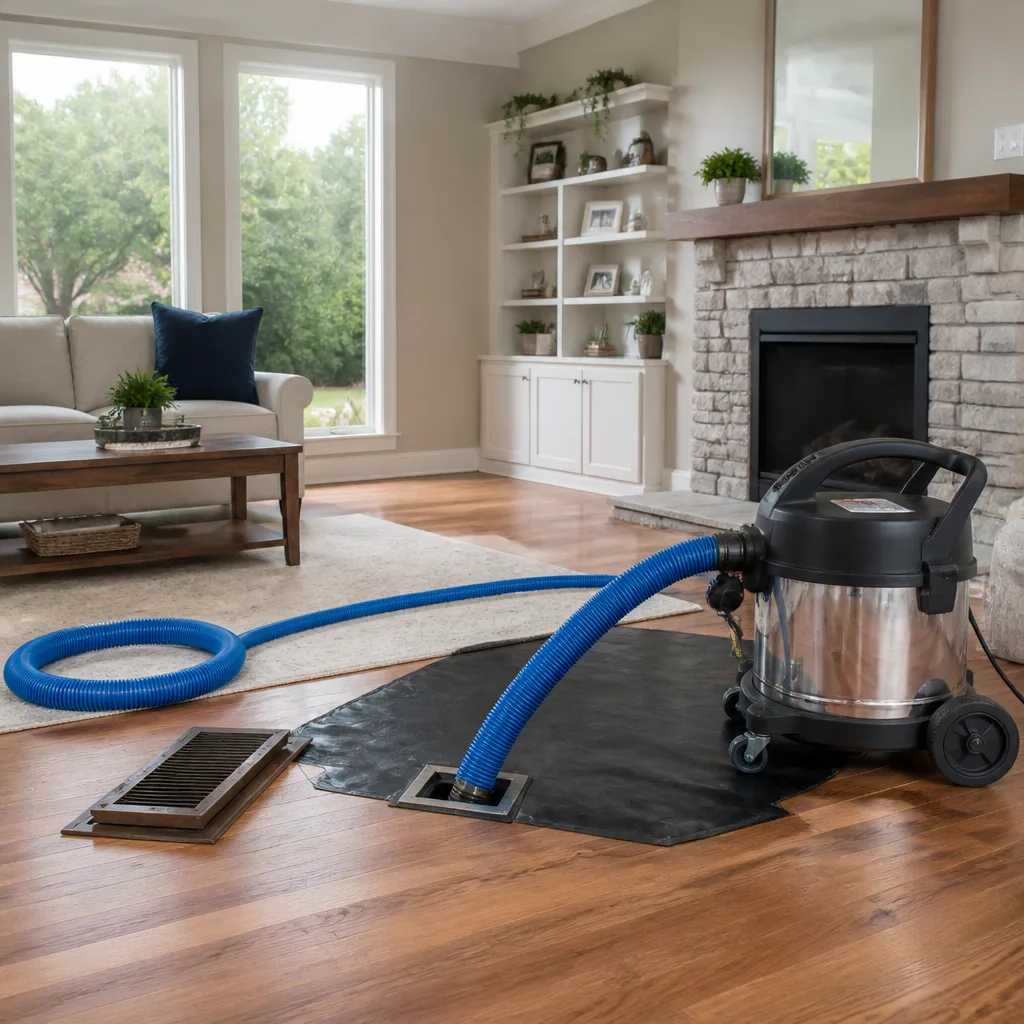 Whole-home duct cleaning
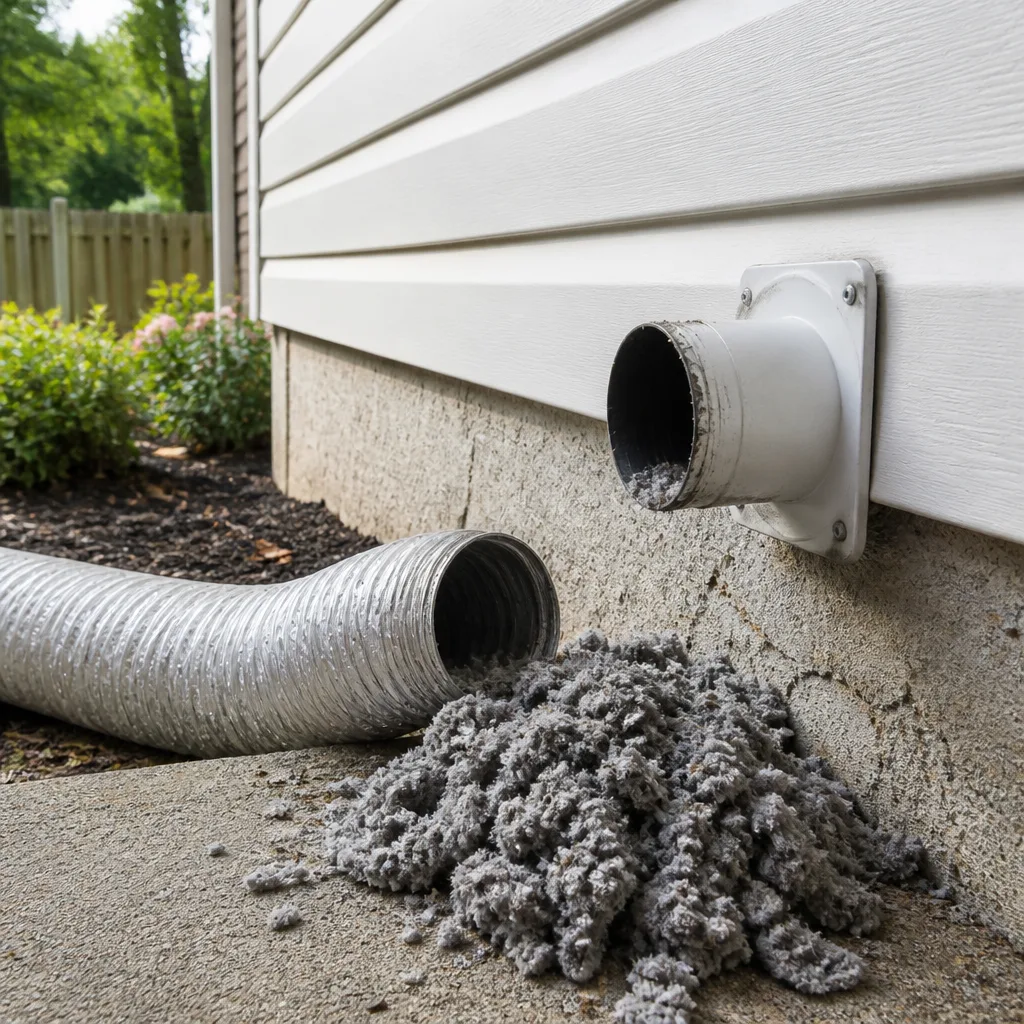 Dryer vent cleaning
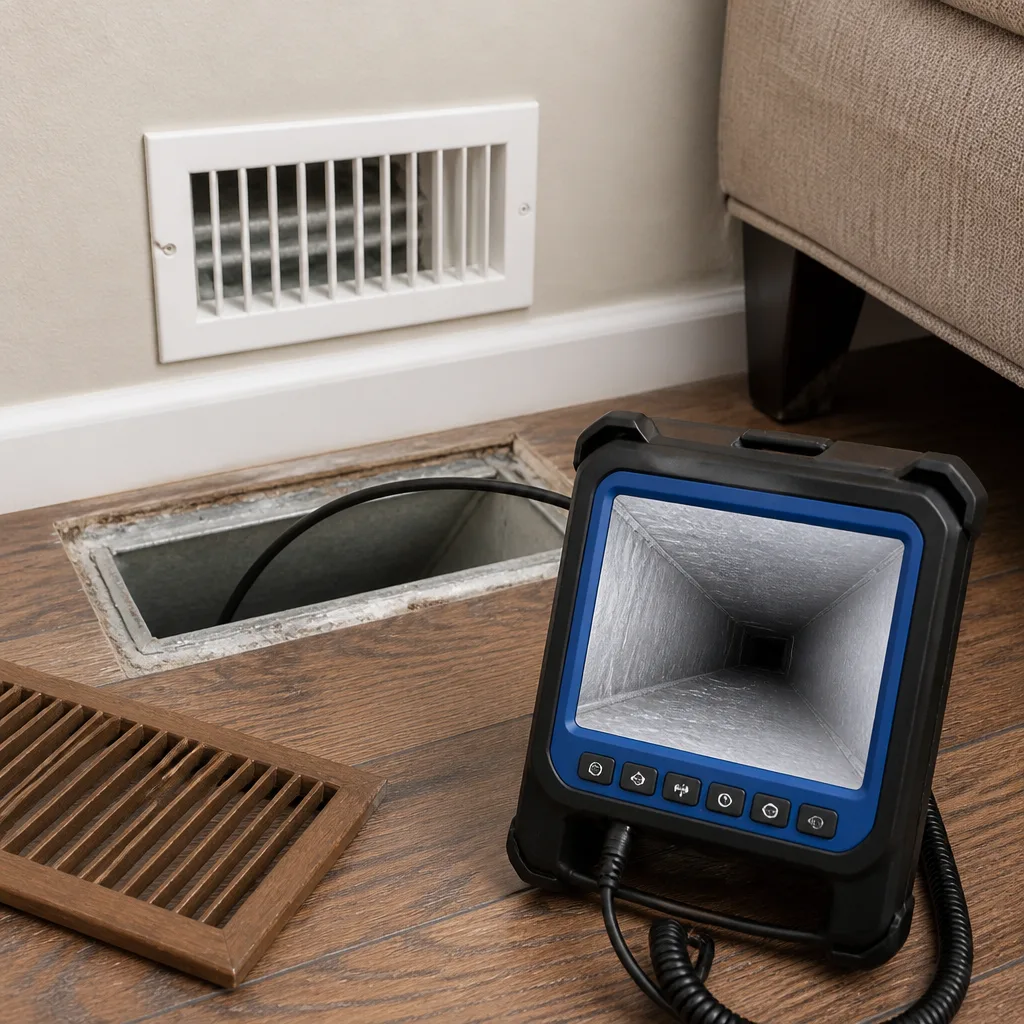 Camera inspection
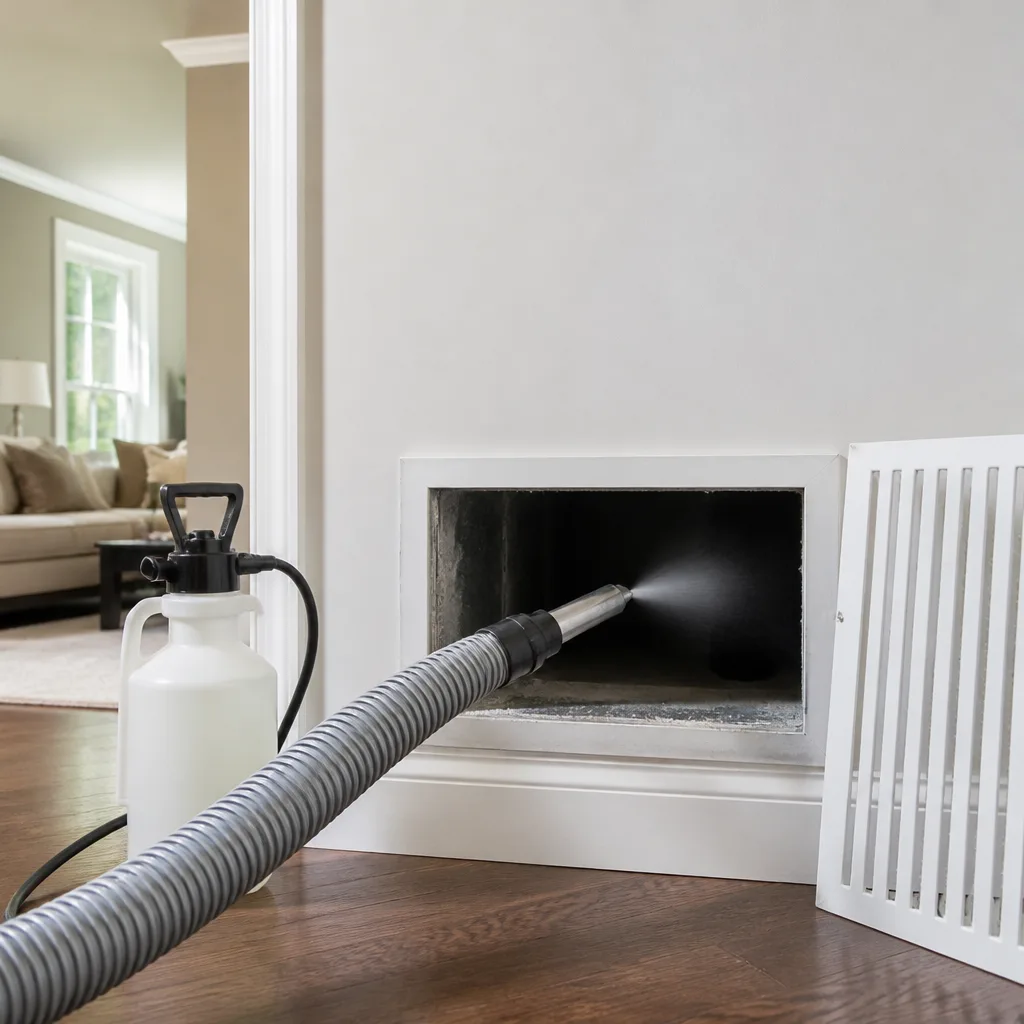 Sanitizing & deodorizing
Whole-system duct and dryer vent check with before-and-after photos - you see exactly what came out of your vents
That "$99 whole-house special" is a bait ad - the real number appears once they are in your hallway, or the "clean" is a shop-vac at the register. We photograph the inside of your ducts before and after instead.
How to Hire an Air Duct Cleaning Contractor in Placentia: A Step-by-Step Guide
California doesn’t require a specific state license to offer air duct cleaning, which means a coupon crew with a rented vacuum and a trained specialist can look identical on a quote sheet. The gap isn’t in the price. It’s in the credentials nobody hands you unless you ask. Most homeowners in Placentia never ask, and that’s exactly what the industry counts on. This guide gives you a 15-minute vetting framework: the three credentials to verify independently, five interview questions that expose undertrained crews, how to read a quote for bait-and-switch pricing, and what a real contract should say before anyone touches your ductwork. By the end you’ll know how to hire on evidence instead of adjectives.
Quick Answer
To hire an air duct cleaning contractor in Placentia, verify three things before scheduling: NADCA membership (checkable through NADCA’s member lookup), relevant California contractor license status through the CSLB (a C-20 HVAC or C-38 sheet metal license, when the scope includes repair or modification), and documented use of EPA-registered sanitizers if sanitizing is on the quote. Then ask what equipment they run, how they establish negative pressure, and what documentation you’ll receive after the job. Anyone who can’t answer those three questions clearly is not a specialist.
Styles & brands we work with
- Whole-home duct cleaning
- Dryer vent cleaning
- Camera inspection
- Sanitizing & deodorizing
Table of Contents
- Why California’s Licensing Gap Makes Vetting Essential
- The Three Credentials to Verify Before You Schedule
- Five Interview Questions That Expose Undertrained Crews
- What a Legitimate Pre-Job Inspection Looks Like
- How to Read an Air Duct Cleaning Quote in Placentia
- Structuring the Contract for Accountability
- How Often Ducts Really Need Cleaning in Placentia
- Common Mistakes to Avoid
Why California’s Licensing Gap Makes Vetting Essential
Air duct cleaning is one of the few home services in California where no single license is required to hang out a shingle and start taking calls. There’s no state-mandated certification for the cleaning portion of the work. A general contractor’s license, a C-20 (HVAC) license, or a C-38 (sheet metal) license becomes relevant when the scope touches repair, modification, or installation of ductwork, but the cleaning itself falls into a regulatory gray area. That gray area is why the Placentia market looks the way it does.
What that means for you: the usual trust signals don’t apply. A business license is cheap. A logo is free. A five-star review can come from fifteen jobs where nobody opened a wall or checked airflow after the fact. The homeowner has no regulatory backstop, so the vetting falls entirely on you.
There’s a second layer to this in Placentia specifically. Much of the city’s housing stock went up in the mid-20th century, and a lot of it still runs the original rigid metal ductwork. That’s actually good news – rigid metal ducts, when they’re sealed, hold up well. But original ductwork in any house of that era carries two complications: joints that have lost their mastic and started leaking, and the possibility of older duct insulation or wrap materials that require careful handling. A crew that doesn’t know how to identify those materials before cutting into a duct run is a crew that’s already in over its head. Ask about it. A specialist will have a clear answer about what they do when they encounter suspect material in an older Placentia home – and the answer is never “we just carefully pull it out.”
The good news is that the gap between a certified professional and an unqualified crew is highly visible once you know what to look for. It shows up in equipment brand names, in the way they talk about pressure and containment, in what’s on the quote, and in what they hand you when the job is done. The rest of this guide is about drawing that gap into the open.
The Three Credentials to Verify Before You Schedule
Three credentials separate a specialist from a crew with a shop vac. Each can be verified independently – not by taking the contractor’s word for it – and each takes under five minutes.
1. NADCA Membership
The National Air Duct Cleaners Association sets the industry standard for how duct cleaning should be performed. NADCA membership isn’t required to operate, but it’s a meaningful filter: members agree to follow a defined standard of care and to keep current with the association’s assessment and cleaning protocols. Verify by looking the company up in NADCA’s member directory rather than trusting a logo on their website – logos get borrowed, and the directory doesn’t.
2. California Contractor License Status
The cleaning portion of the work isn’t a licensed scope in California, but the moment the quote includes duct repair, sealing, or any modification to the HVAC system, a license matters. A C-20 (warm-air heating, ventilating, and air-conditioning) or C-38 (sheet metal) license covers the relevant work, and both are checkable through the Contractors State License Board’s public lookup. Look up the company name. Then verify the license is active, not expired or suspended, and that the work described in the quote matches the classification. If the quote includes sealing or repair and there’s no license on file, that’s a hard stop.
3. EPA-Registered Sanitizer Use
Sanitizing is the easiest part of a duct job to fake, which is why the credential matters. A legitimate sanitization protocol uses products registered with the U.S. Environmental Protection Agency for use in HVAC systems, applied according to the label. Ask which product they use and whether it’s EPA-registered for HVAC application. An honest answer will name the product. A vague answer about “a natural enzyme treatment” is a red flag – not because enzymes are inherently bad, but because a contractor who can’t name the product can’t tell you whether it was registered for the application or what the label requires.
- NADCA membership: verify in the association’s member directory, not on the company’s website.
- C-20 or C-38 license (when repair or sealing is in scope): verify through the CSLB lookup, and check status, not just existence.
- EPA-registered sanitizer: ask for the product name and confirm it’s labeled for HVAC use.
None of those three checks require a phone call. All three should be done before you schedule the appointment, and any contractor who resists them isn’t the right fit. When we vet local professionals, this is the baseline we start from.
Five Interview Questions That Expose Undertrained Crews
Once the credentials check out on paper, the interview confirms them in practice. Ask these five questions on the initial call. The point isn’t to catch anyone out – it’s to see whether the answers are specific. A trained crew talks about equipment and process. An undertrained one talks about price and scheduling.
- “What equipment brand do you use for the cleaning itself?” A professional answer names professional-grade tools – Rotobrush or Nikro, for example. The commercial HVAC industry relies on those systems for a reason: they agitate and extract rather than simply vacuum. If the answer is “a commercial vacuum” or “our own proprietary system” with no brand, treat that as a no.
- “How do you establish negative pressure during the job?” This is the technical heart of a proper cleaning. Negative pressure means the working area is under lower pressure than the surrounding space, so loosened debris moves into the collection system rather than out into your living room. A trained crew will talk about sealing registers, connecting a high-volume collector, and confirming the pressure differential before starting. Someone who says “we just hook up the vacuum” has told you they don’t contain the debris.
- “Do you perform post-cleaning airflow verification?” A proper job includes a before-and-after check of airflow at the registers. Not a guess – a measurement. A contractor who can’t describe how they verify the result isn’t checking the result.
- “How do you handle suspect older flex duct or insulation?” This matters in Placentia’s mid-century housing. If a crew encounters material that could contain asbestos-era components, the correct answer is to stop, identify it, and follow the appropriate protocol – not to cut into it. A trained crew will tell you this directly.
- “What’s your sanitization protocol?” If sanitizing is on the quote, ask what product is used, what it’s registered for, and how it’s applied. The answer should name the product and describe the application. Anything else is a spray can with a promise attached.
Ask all five in one call. The pattern in the answers will tell you everything. Five clean, specific answers mean you’re dealing with a professional. Three vague ones and two deflections mean you’ve found a crew that knows the words but not the work.
What a Legitimate Pre-Job Inspection Looks Like
No honest contractor can quote a final air duct cleaning price over the phone. A visual inspection comes first, and that inspection is part of what you’re paying for. The point isn’t to add a sales visit – it’s to establish what’s actually in the system before anyone commits to a number.
A proper inspection includes several distinct steps, and they don’t happen in five minutes:
- Register-by-register walkthrough. Every supply and return should be checked, not just the easy ones. Airflow felt by hand at each register, condition recorded.
- Filtration and air handler check. The filter slot, the blower compartment, and the air handler are part of the system. A contractor who quotes ducts without looking at the air handler has missed half the job.
- Visual interior assessment. A camera in the ductwork – rigid or flex – to see the actual interior condition. Photos are better than descriptions.
- Leak assessment. Joints, connections, and any accessible duct runs should be checked for gaps and separation. Leaks found during inspection are the whole reason the quote should include a sealing line item.
- Contamination check. Evidence of moisture, pest activity, or material degradation should be identified in the inspection, not discovered mid-job.
After the inspection, the contractor should be able to explain what they found and what the job will involve in plain language. If the inspection is furtive, if photos aren’t offered, or if the quote is already firm before anyone has opened a register, you’ve learned something. The air duct cleaning service and HVAC cleaning work a professional recommends should be traceable back to that inspection. Anything on the quote that isn’t – a line for something they never mentioned on-site – is worth questioning.
How to Read an Air Duct Cleaning Quote in Placentia
Bait-and-switch pricing is the industry’s default failure mode. It works like this: a low advertised number gets a truck to the door, and the real price emerges once the technician is inside and the homeowner is cornered. You can spot the setup before you ever schedule by reading the quote itself.
Hallmarks of a Bait-and-Switch Quote
- Per-vent language. A quote priced per register or per outlet is a quote designed to be undercut later. “Ten vents included” is a number that can always be expanded on-site. A proper quote is per system, not per vent.
- Vague “whole-house” descriptions. “Whole-house air duct cleaning – $X” with no line items is not a quote – it’s a teaser. It leaves every specific scope decision unanswered, and those are exactly the decisions the crew will price up once they’re on-site.
- Missing line items for sealing and sanitization. If the quote is for cleaning only, that’s fine – as long as it says so. But if sealing and sanitizing are going to be on the final invoice, they need to be on the initial quote. A quote that forces you to add them later is a quote that already baited you.
- No written estimate. A verbal number isn’t a quote. The written estimate is the price. Anything quoted on the phone before the inspection should be presented as a “likely range,” not a firm price.
- Pressure tactics. “The price goes up after today” or “we can only honor this if you book now” is a sales script, not a quote. Contractors who are comfortable with their price let you take the written estimate away and think about it.
What a Good Quote Looks Like
A clean, honest quote reads like a scope of work, not a sales flyer. It should include:
- A stated flat price per system (not per vent), set by the written estimate
- What’s included: number of supply and return runs, air handler, filter slot
- Separately priced line items for sealing, repair, and sanitization (or a clear statement that they’re not included)
- What equipment will be used (Rotobrush, Nikro, and similar – names, not adjectives)
- Containment method (negative pressure and filtration, e.g., Abatement Technologies equipment)
- Deliverables: any photos, report, or verification documentation
- Warranty and satisfaction terms in writing
The written estimate sets the final price. If the number on-site doesn’t match the number in the written estimate, that’s the moment to stop the job and ask why. A legitimate contractor will explain any change – and the explanation won’t be “the job was bigger than we thought.”
Structuring the Contract for Accountability
The contract is where trust stops being a feeling and starts being a document. Before anyone starts work, you should have in writing:
- Scope of work spelled out by component. Every supply run, every return, the air handler, filter slot, and any included sealing or sanitizing. Generic “whole-house cleaning” language isn’t accountability – it’s a loophole.
- Flat price per system. The number should be stated clearly and committed to. No per-vent additions after the fact, no “we discovered extra vents” surcharges.
- Before-and-after photo documentation. The photos should be of your ducts, not stock photos or a portfolio from another job. This is one of the simplest ways to know the work was actually done.
- Airflow verification method. The contract should state that airflow will be measured and compared. It’s the difference between “we cleaned it” and “we can show you the change.”
- Warranty terms. At minimum, a statement of what happens if the work is unsatisfactory and how the customer is made whole. Read the warranty before signing rather than after.
- Satisfaction guarantee language. The right contractor wants you to accept the work, not just pay for it. A satisfaction guarantee in writing, with defined terms, is worth more than a verbal “we stand behind our work.”
One more element the contract should address if you have older ductwork: any repair or sealing scope. If the inspection found leaks at the joints, the quote should have included sealing or repair – not left it for a follow-up visit and a second quote. The best contractors are structured to handle repair and sealing in the same visit, because that’s what the inspection found. If the quote doesn’t reflect the inspection, the inspection wasn’t real.
Read the whole contract. The deliverable is a clean, sealed, documented duct system – not “we tried.” If the paperwork doesn’t commit to that, the work won’t.
How Often Ducts Really Need Cleaning in Placentia
There’s no universal answer to how often ducts need cleaning, and any company that insists on an annual visit as a matter of course is selling a maintenance schedule rather than solving a problem. The honest answer depends on three things: what’s in the system, how the house is used, and what the inspection finds.
A few signals that make a cleaning worth doing:
- Visible dust or debris at the supply registers when the system kicks on
- Musty or stale odors from the vents
- Uneven airflow – rooms that stay warmer or cooler than the rest of the house
- Recent renovation or construction where dust was generated
- Allergy symptoms that improve away from home and worsen inside
- Pest activity or evidence of moisture in the ductwork
- A house with a filter that’s being replaced more often than expected – often a sign the system is recirculating more than it should
Placentia’s specific climate factor is dust rather than moisture. The inland climate here dries out in summer and fall, and in older homes – many with the original rigid ductwork – the joints loosen and leak over time. That combination, dry dust plus loose joints, is what drives most of the calls we hear about. Sealing isn’t just an efficiency fix in a Placentia home. It’s the reason dust stops getting pulled into the return from the attic or garage instead of from the living space.
For a home with no current issues and a clean inspection, waiting several years is perfectly reasonable. The triggers above are the things to watch. Cleaning when the system shows no sign of needing it is money spent for no benefit; skipping it when the system shows real contamination is the opposite problem. The inspection tells you which is which, which is why we don’t recommend cleaning schedules without one.
Common Mistakes to Avoid
- Booking off a coupon price. A teaser number is a sales approach, not a quote. It sets the initial price low because the upcharge comes on-site. If the number in the ad doesn’t match the number on the written estimate, you’re looking at a different job than the one you booked.
- Skipping the CSLB and NADCA lookups. Both take under five minutes each, and neither requires a call. Most Placentia homeowners skip them because the contractor presented paperwork that looked official. A logo is not a license. Verify independently.
- Accepting a per-vent quote. Per-outlet pricing is the structural weakness bait-and-switch relies on. Once you’ve accepted per-vent pricing, every register the crew decides to count becomes a line item. Insist on per-system pricing.
- Letting the crew start without a written estimate. A verbal number is not a commitment. The written estimate is the price. If the money hasn’t been discussed in writing before work starts, you’ve accepted whatever comes next.
- Skipping the pre-job inspection. A contractor who quotes and books a job over the phone with no inspection is guessing – and the guess will be to their benefit when the system turns out to be more complicated than described. Insist on a visual inspection before accepting a price.
- Accepting sanitizing without asking about the product. If a crew is going to spray something through your HVAC system, you deserve the name of the product and confirmation it’s registered for HVAC application. An unregistered spray from a bottle is a false sense of safety.
- Overlooking the dryer vent. A duct cleaning crew that doesn’t also check the dryer vent is missing a fire-risk item that lives in the same house. If dryer vent cleaning isn’t on the menu, that’s a scope gap worth noting before you sign.
See the difference
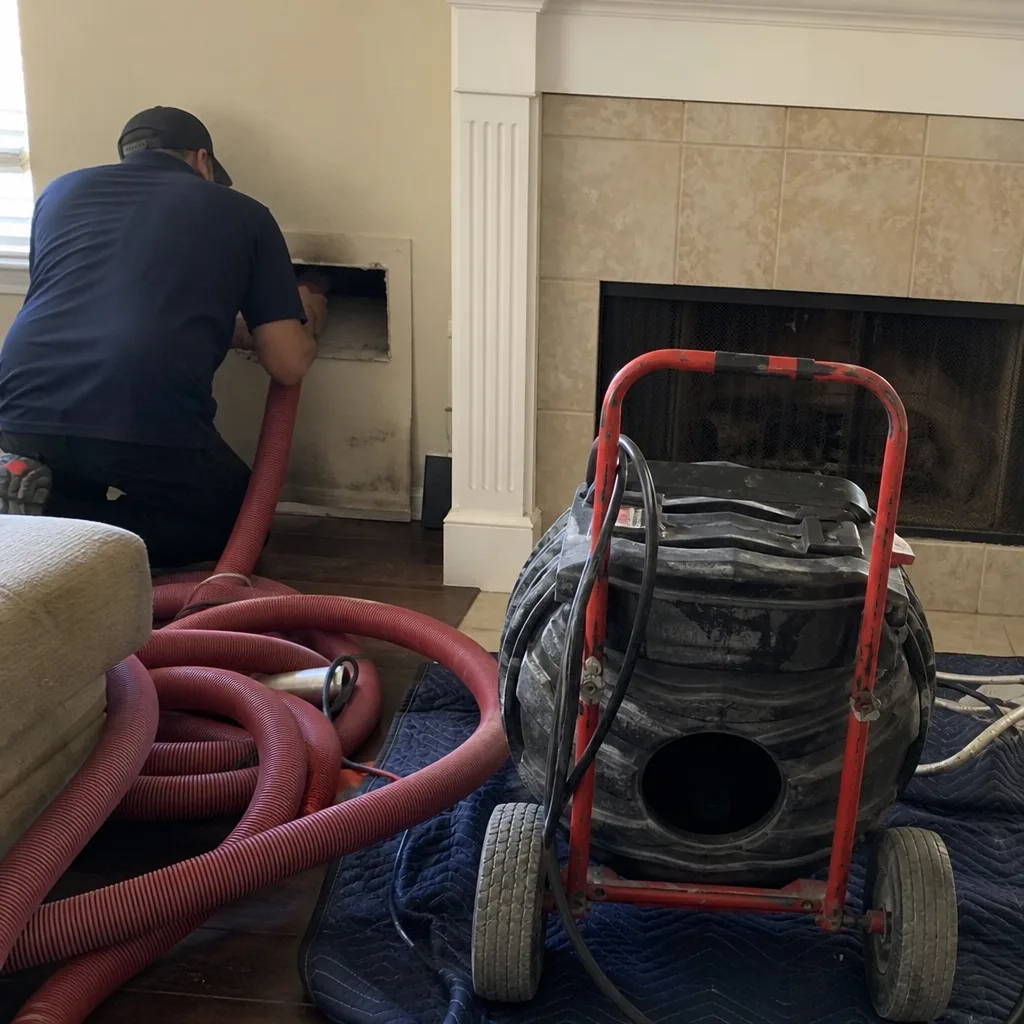 Before
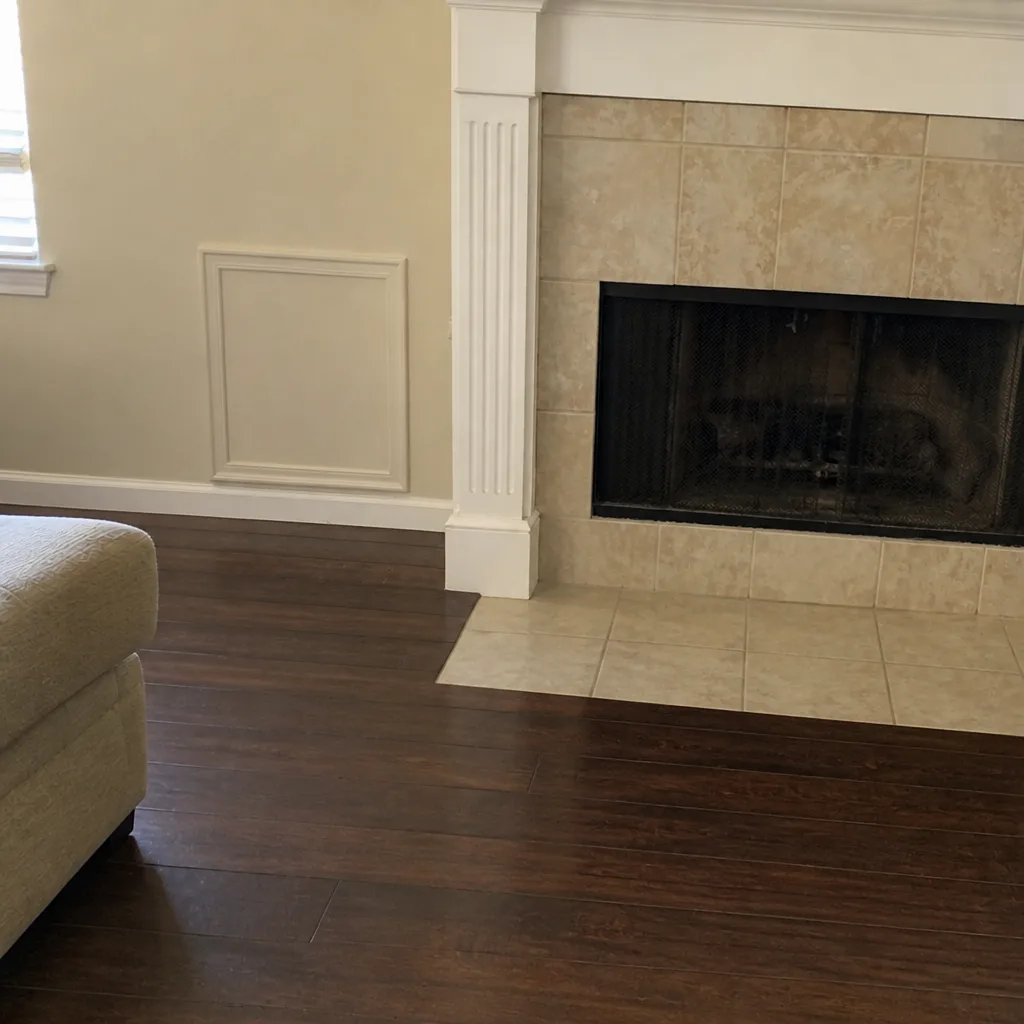 After
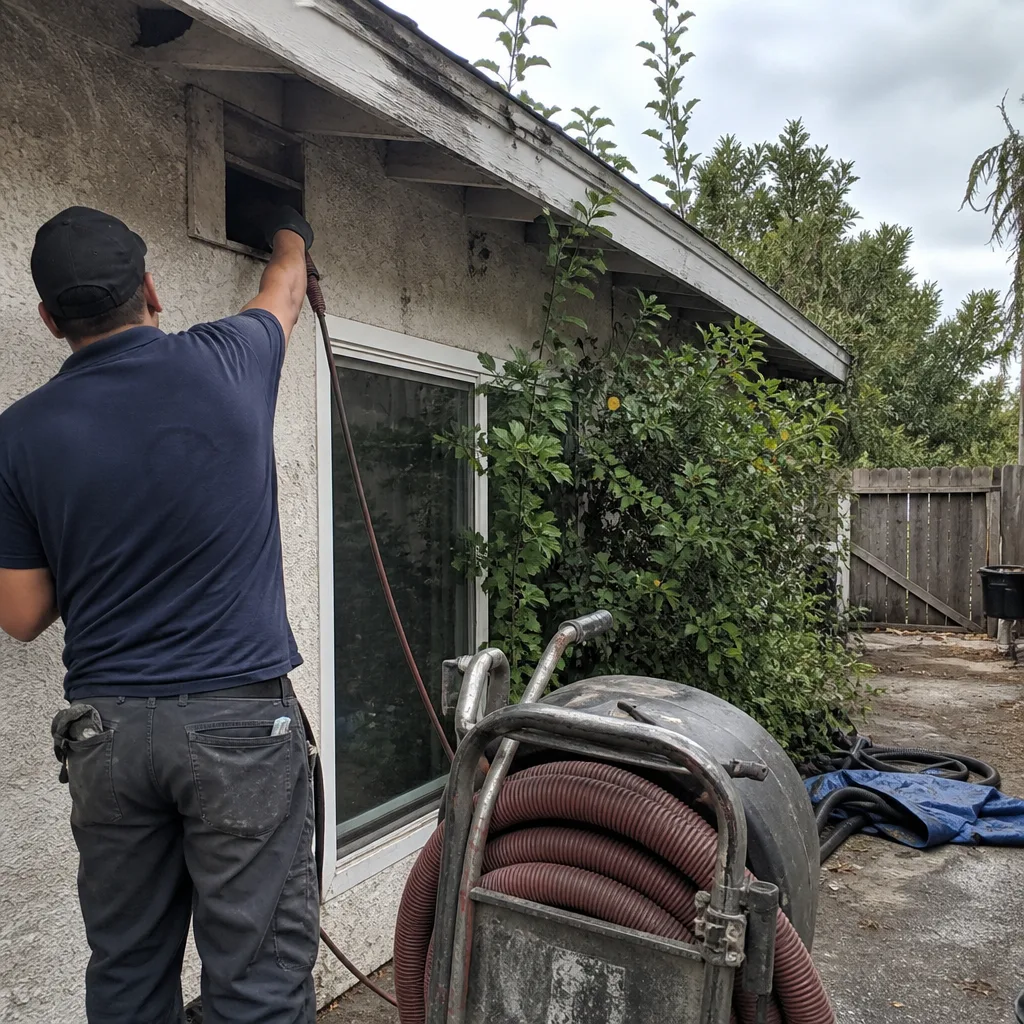 Before
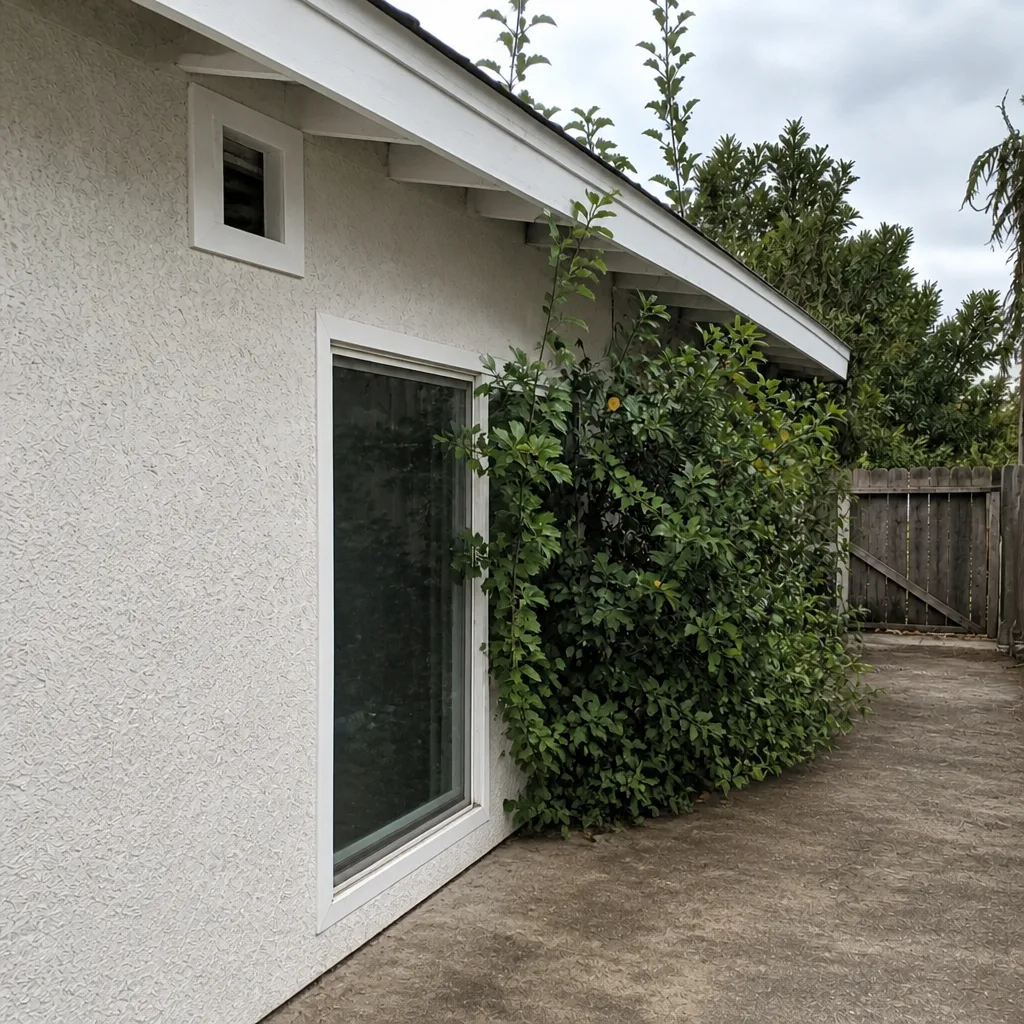 After
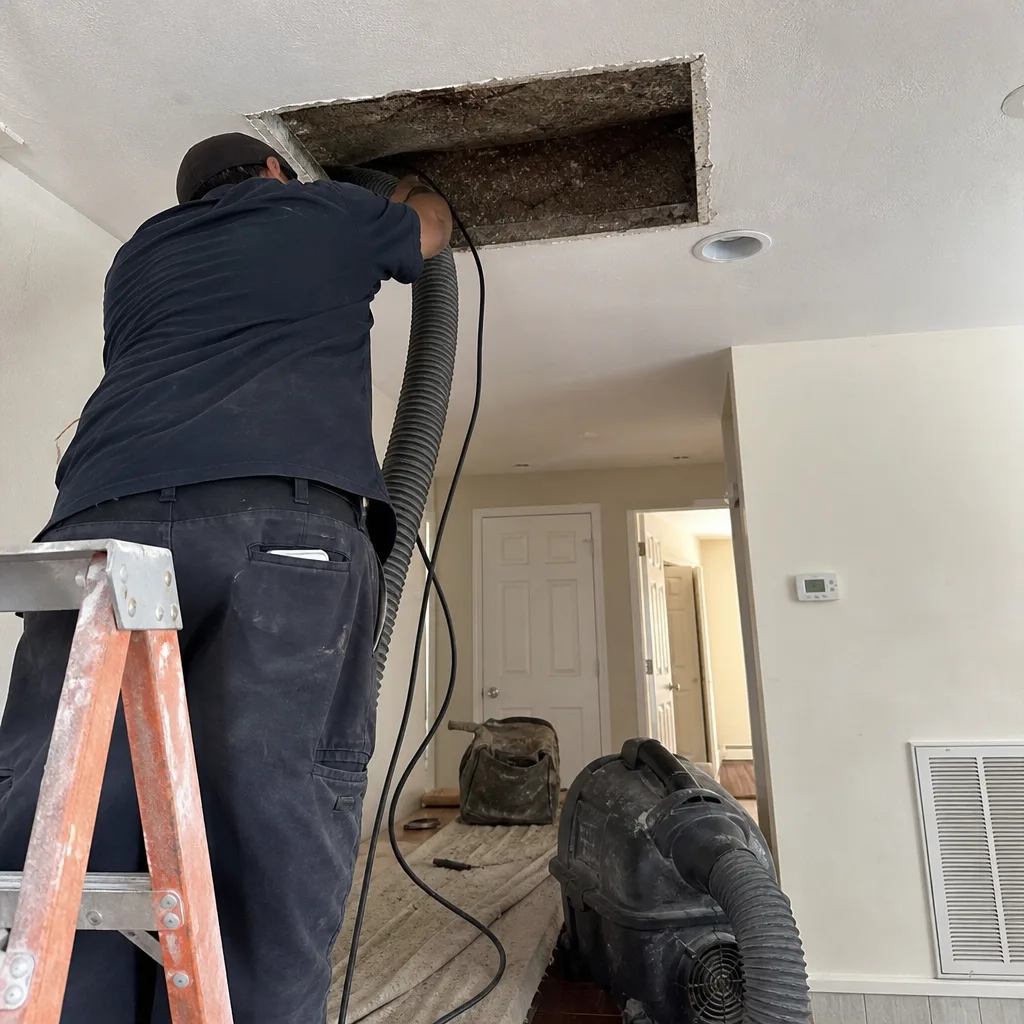 Before
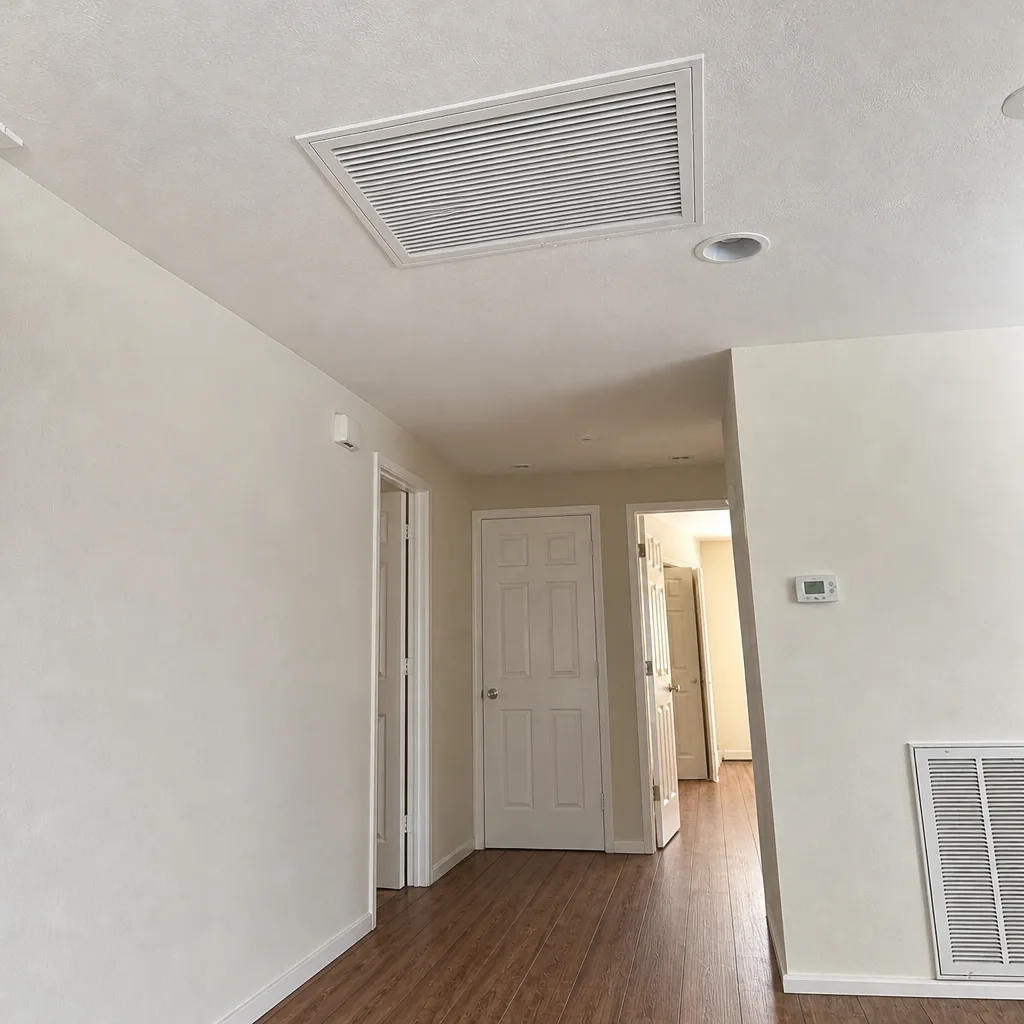 After
When to Call a Professional
Some jobs are worth calling a specialist for, and some aren’t. The triggers on the specialist side are fairly specific: visible dust blowing from registers when the system runs, a musty smell that follows the HVAC, a recent renovation that left a lot of fine dust in the house, uneven airflow that’s worsened over time, or a home inspection that flagged duct condition. Those are all situations where the assessment matters as much as the cleaning, and where an inspection will tell you what kind of work the system actually needs.
If you’ve seen evidence of pest activity, moisture, or older material in or around the ductwork, that’s also a specialist trigger. DIY duct cleaning – a shop vac at each register – doesn’t establish negative pressure, doesn’t get into the interior surface of the runs, and doesn’t contain debris. It makes dust airborne in the living space rather than removing it. That’s why we don’t recommend it for anything beyond a light surface dusting.
If what you actually need is to know that the work was done and documented, the specialist route is the one that gets you there. Placentia Air Duct Cleaning Pros offers free estimates in Placentia – call (866) 937-8913. We answer 24/7. Fast dispatch from 7am to 7pm, Sunday through Friday.
Frequently Asked Questions
Air duct cleaning pricing is set per system, not per vent, and the number depends on the size and accessibility of the system, the number of runs, and whether sealing, repair, or sanitization are included. For a typical single-family home, expect the written estimate to land in the range of a few hundred to around a thousand dollars for straightforward cleaning, with repair and sealing priced separately. Anyone who quotes a firm number over the phone before inspecting the system is guessing. The written estimate sets the final price. Call (866) 937-8913 for an exact quote – estimates are free.
Cheap quotes are cheap because the scope is smaller than the job. A low per-vent number often becomes a much larger invoice once the crew is on-site and “discovers” additional registers, additional scope, or additional services. The fix is to read the quote structure before you book: per-vent pricing, missing line items for sealing or sanitization, and “whole-house” language with no specifics are the tells. A written per-system quote leaves nothing for an on-site surprise to attach to. Call (866) 937-8913 for a written estimate – estimates are free.
The two things that prove the work was done are before-and-after photos of your own ducts and airflow measurements from the registers. Ask for both in writing before the job starts, not after. A professional crew has no problem with either – it’s routine documentation. A crew without a documented method has nothing to show except an invoice. Call (866) 937-8913 to discuss documentation with the team – estimates are free.
There’s no fixed interval that applies to every home. The honest answer is: when the system shows contamination, moisture, airflow loss, or dust problems – not on a schedule. For a home with an inspection that finds no issues, going several years without cleaning is fine. For a home with recurring allergy symptoms, visible register dust, or recent renovation, cleaning at the first sign of a problem is the right call. Call (866) 937-8913 for an assessment – estimates are free.
California doesn’t require a specific state license for the cleaning portion of air duct work, but a C-20 (HVAC) or C-38 (sheet metal) license becomes relevant when the scope includes duct repair, sealing, or system modification. Verify any license claims through the Contractors State License Board’s public lookup rather than trusting a document from the contractor. NADCA membership is a separate, voluntary credential that indicates adherence to industry cleaning standards, and it’s worth verifying through NADCA’s member directory. Call (866) 937-8913 to ask about credentials directly – estimates are free.
Yes, if the dryer vent hasn’t been checked, it’s worth doing on the same visit. Dryer vents are a leading cause of residential fires when lint accumulates, and they’re a separate fire-risk item from duct contamination. The dryer vent is a discrete problem, and addressing it during a duct cleaning visit makes sense because the crew is already on-site and the inspection scope overlaps. It’s a distinct service – dryer vent cleaning – not part of the duct cleaning itself. Call (866) 937-8913 to ask about a combined visit – estimates are free.
The Bottom Line
Hiring an air duct cleaning contractor in Placentia is a vetting problem, not a shopping problem. California’s licensing gap means the regulation won’t protect you, so the framework you build around the quote has to. Verify three credentials independently – NADCA membership, CSLB license status when repair or sealing is in scope, EPA-registered sanitizers when sanitizing is on the quote. Ask the five interview questions and listen for specifics. Demand a pre-job inspection before any price is final. Read the quote for per-vent pricing and missing scope. Get the contract to commit to a per-system flat price, before-and-after photos, airflow verification, and warranty terms. Do that, and the bait-and-switch model loses its foothold. Skip it, and the field is wide open. If you’d rather start with a conversation than a checklist, call (866) 937-8913 for a free estimate. We answer 24/7. Fast dispatch from 7am to 7pm, Sunday through Friday.
Written by the team at Placentia Air Duct Cleaning Pros.
For a team that handles the work end to end – Placentia Air Duct Cleaning Pros uses Rotobrush and Nikro equipment on every duct cleaning, Abatement Technologies filtration on-site during service, and Aprilaire and Guardsman products in its air quality work. Whether you start with air duct cleaning, HVAC cleaning, or the dryer vent, the visit is documented and the scope is set in writing before anyone picks up a tool.